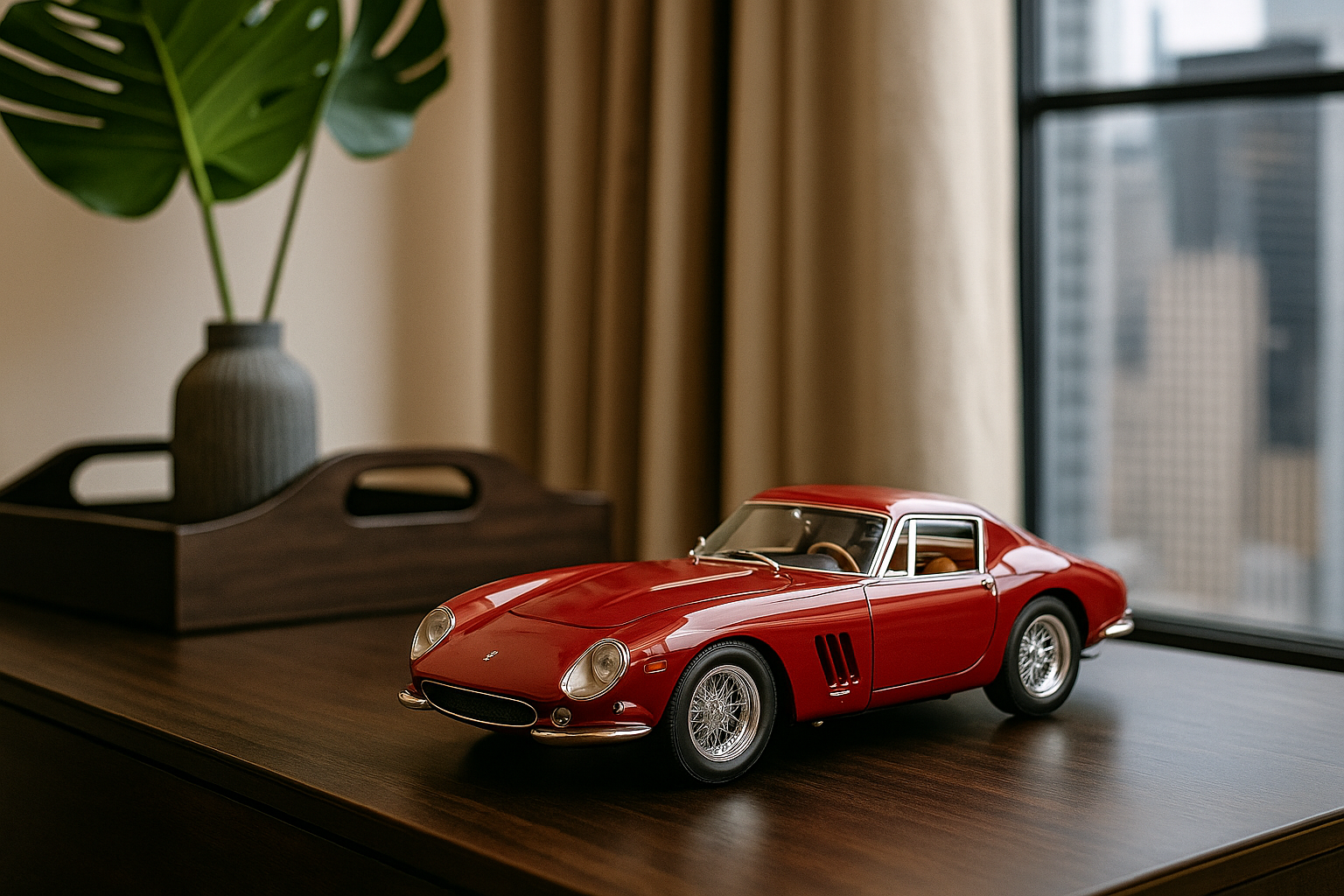


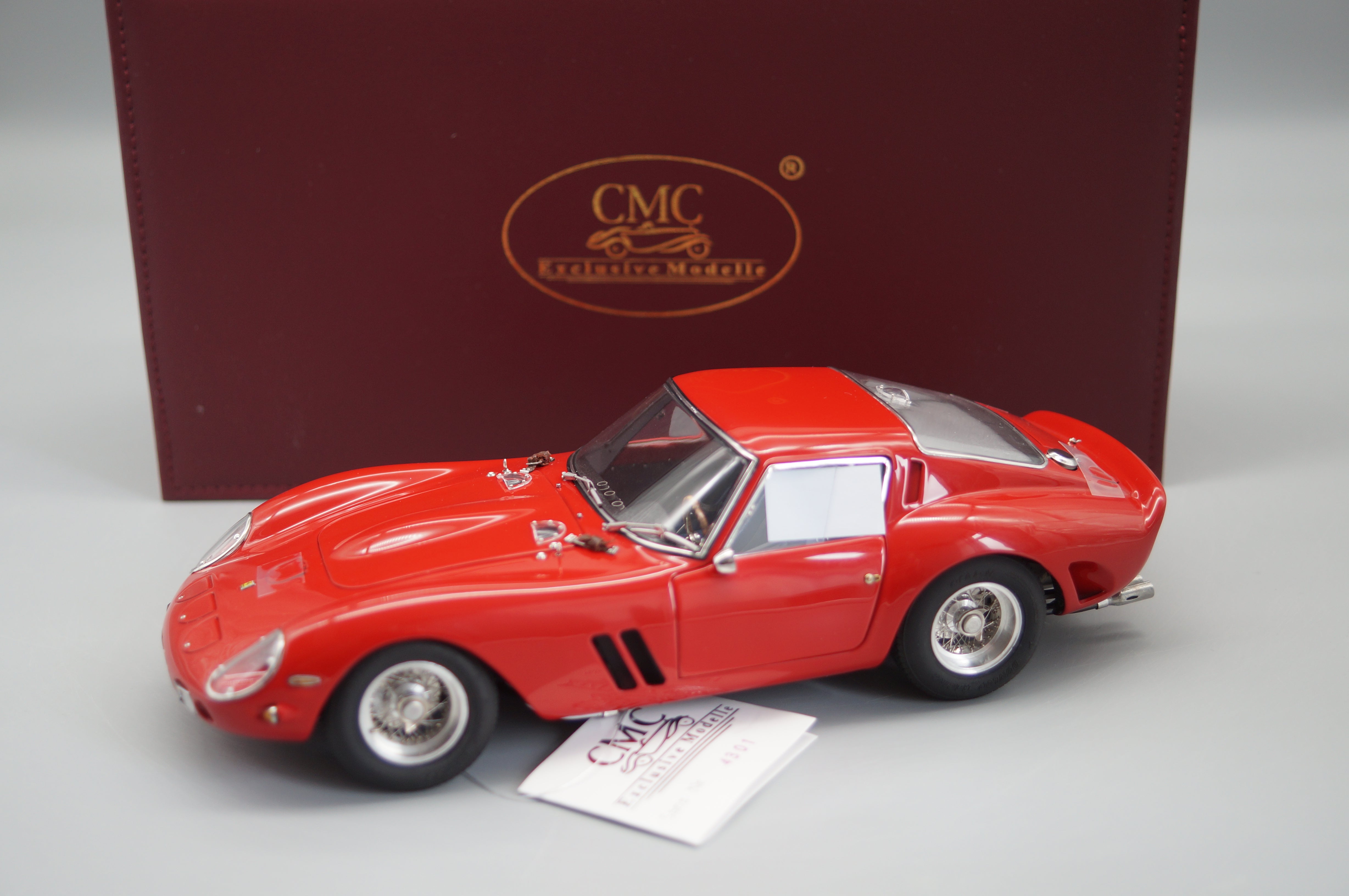
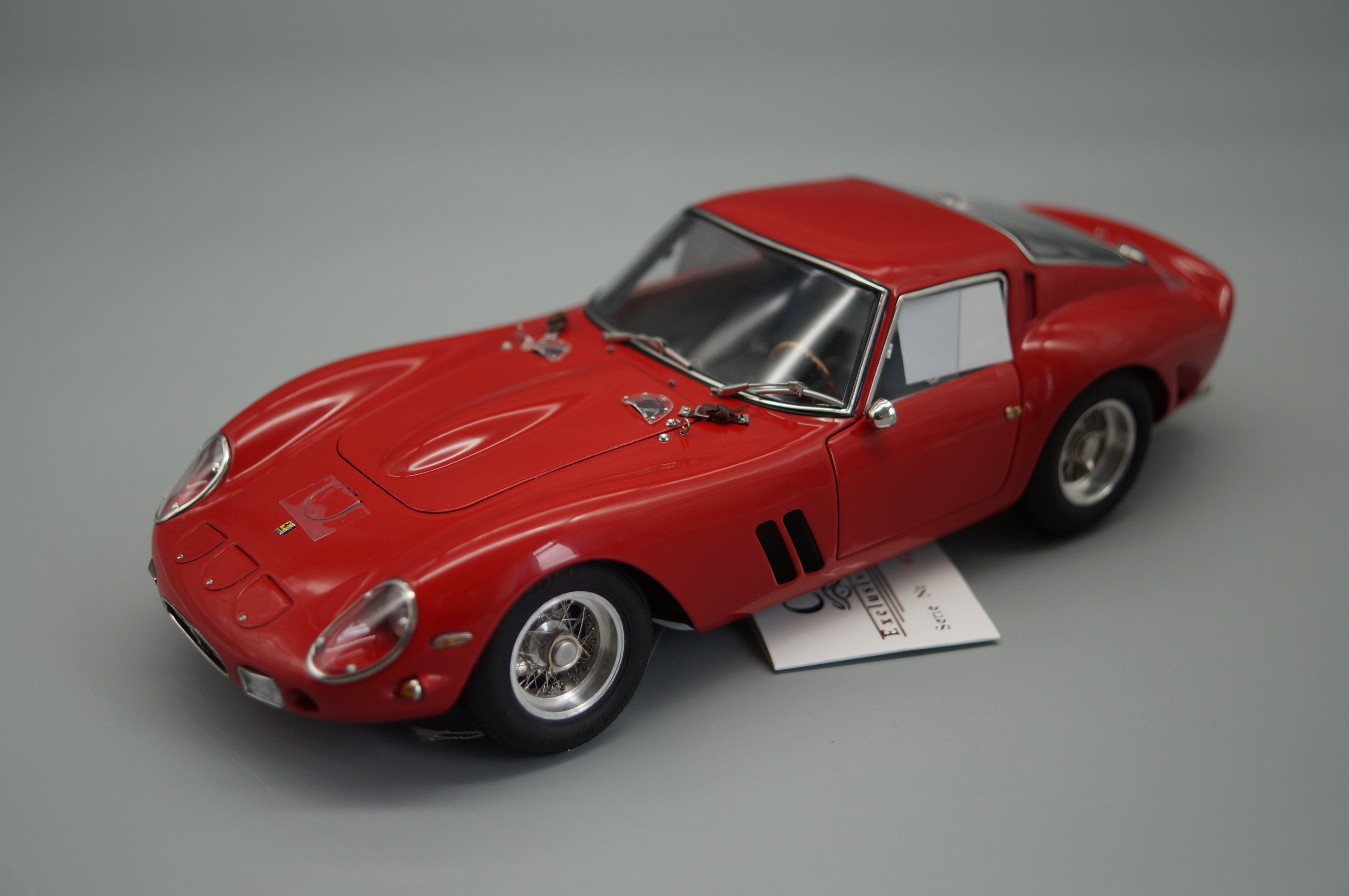
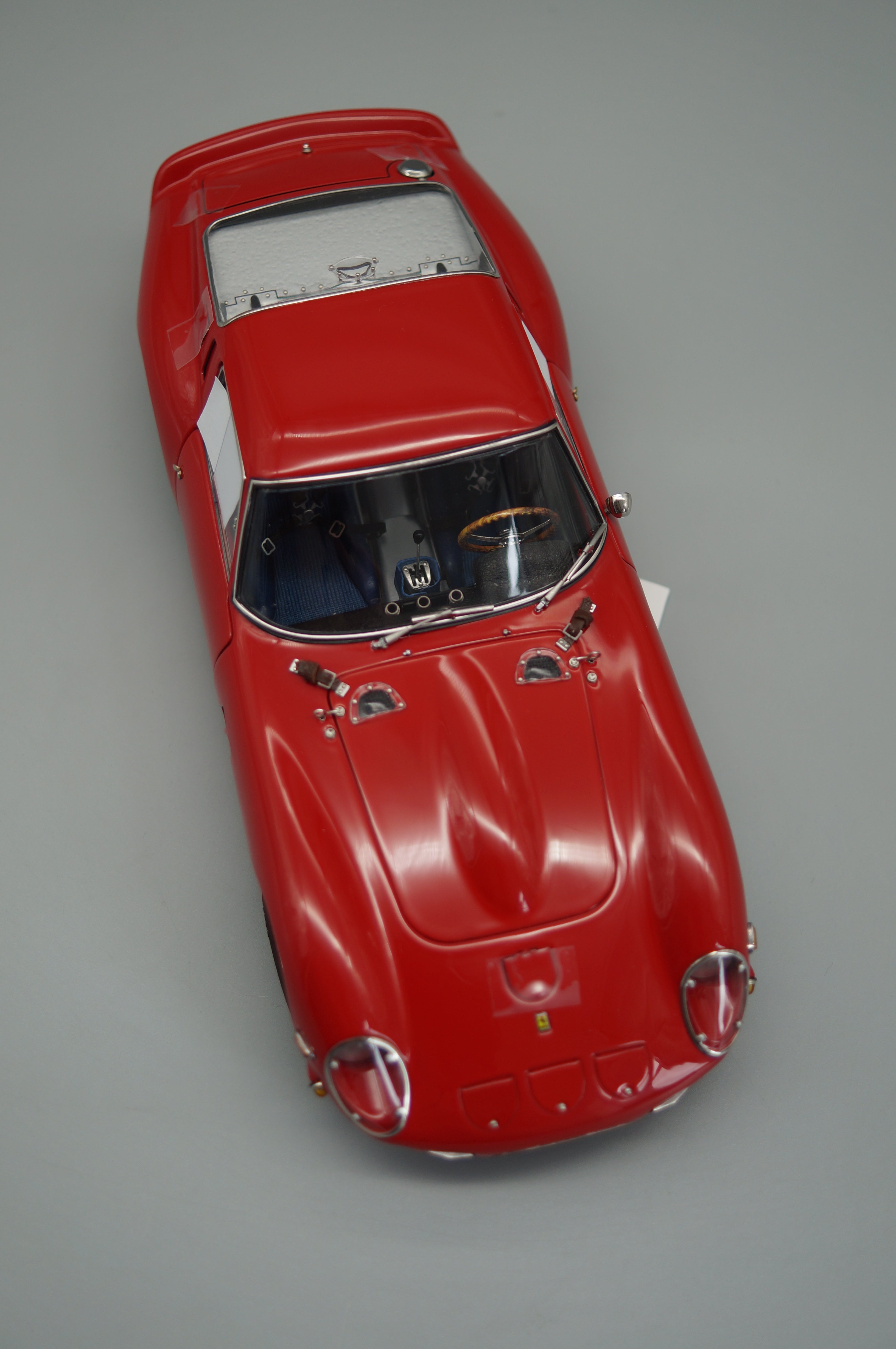
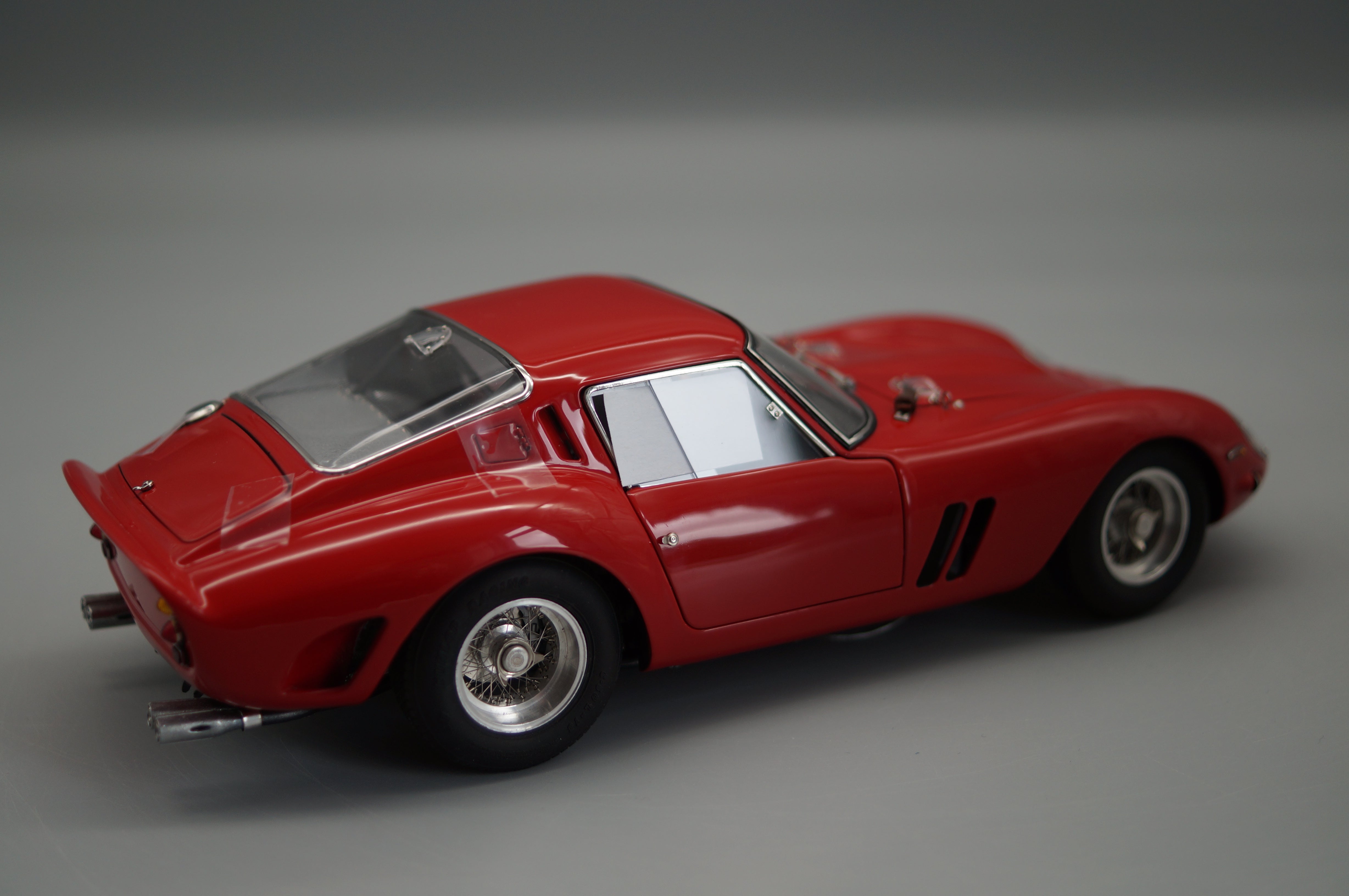
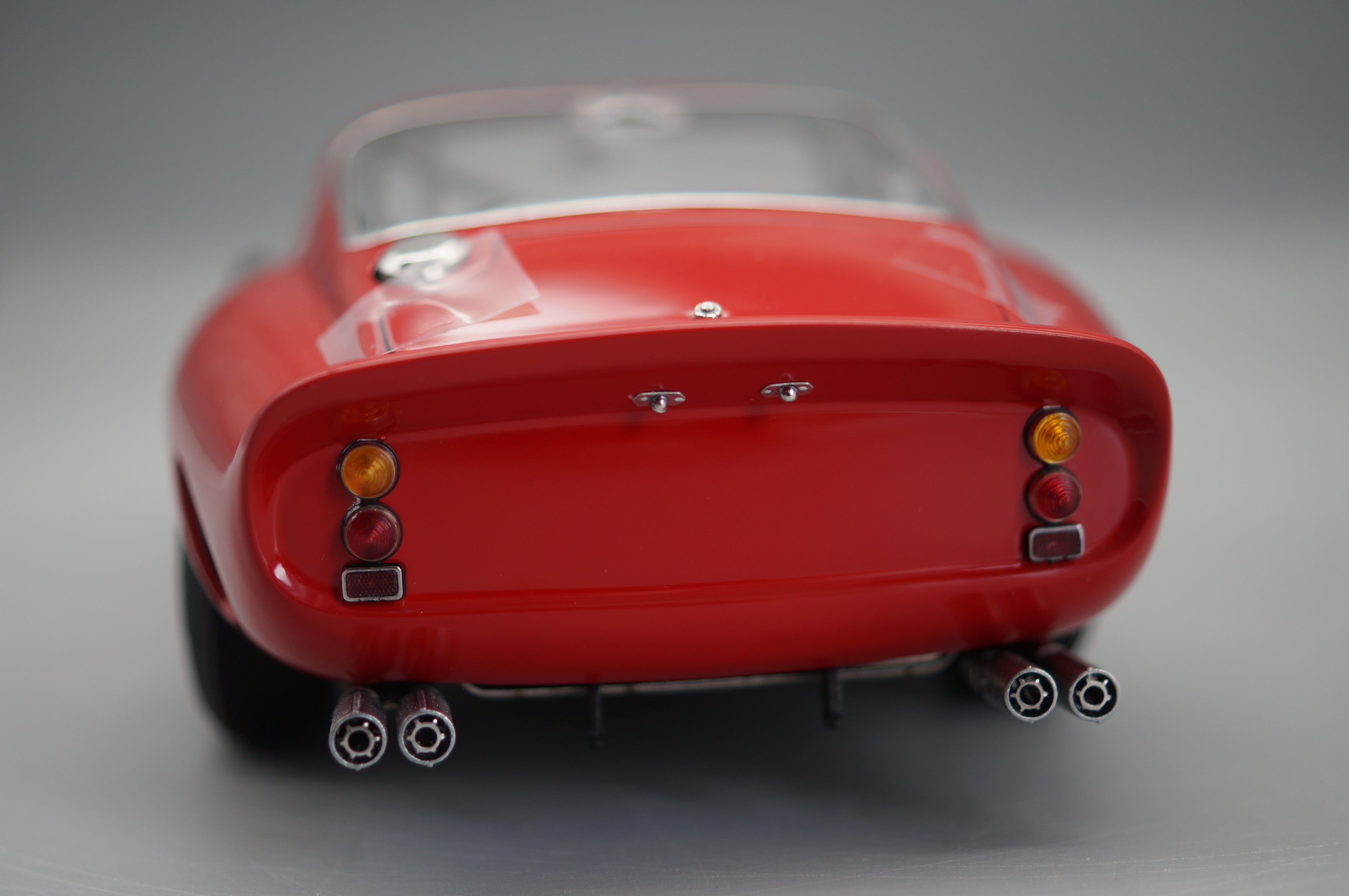
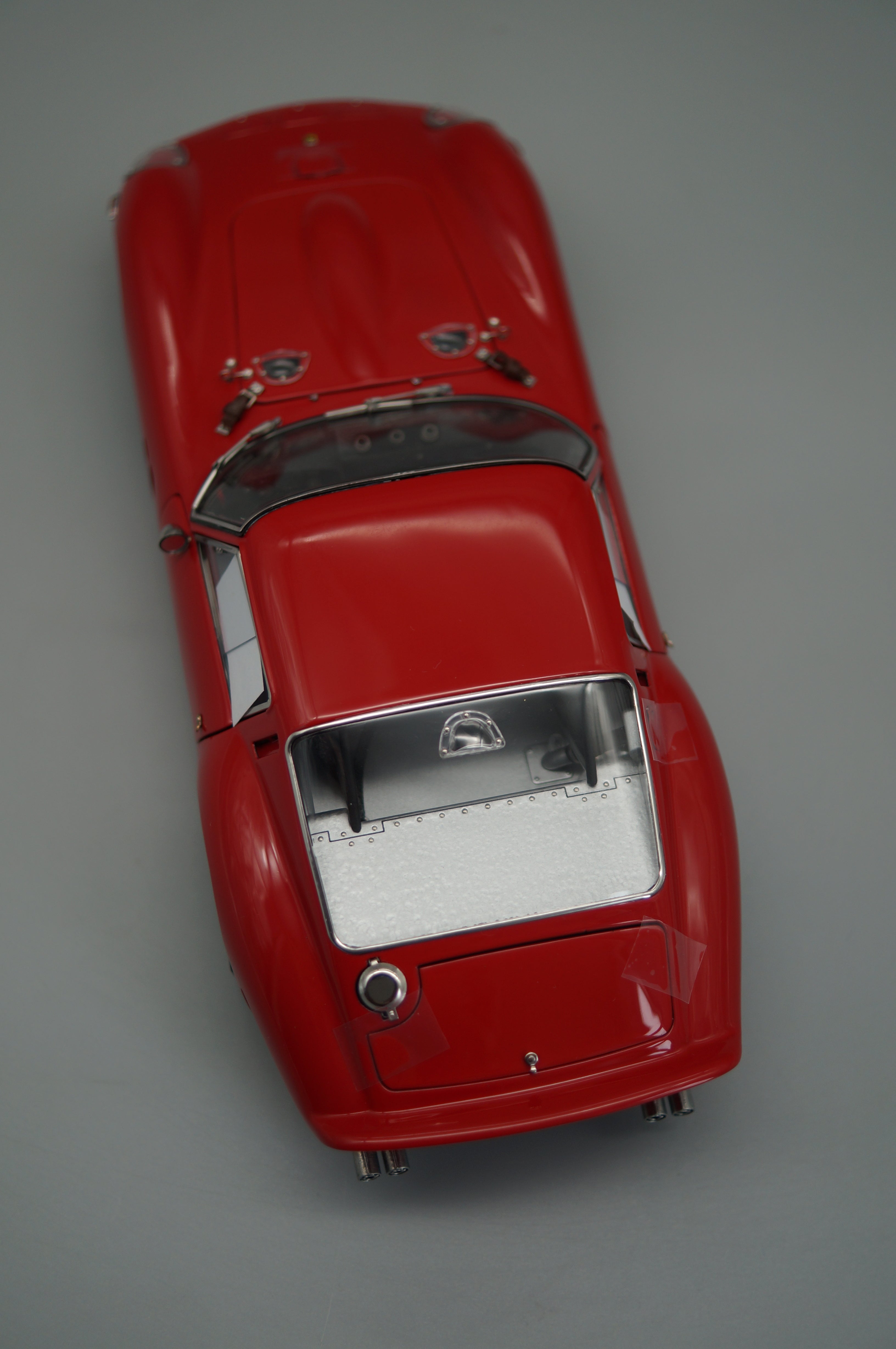
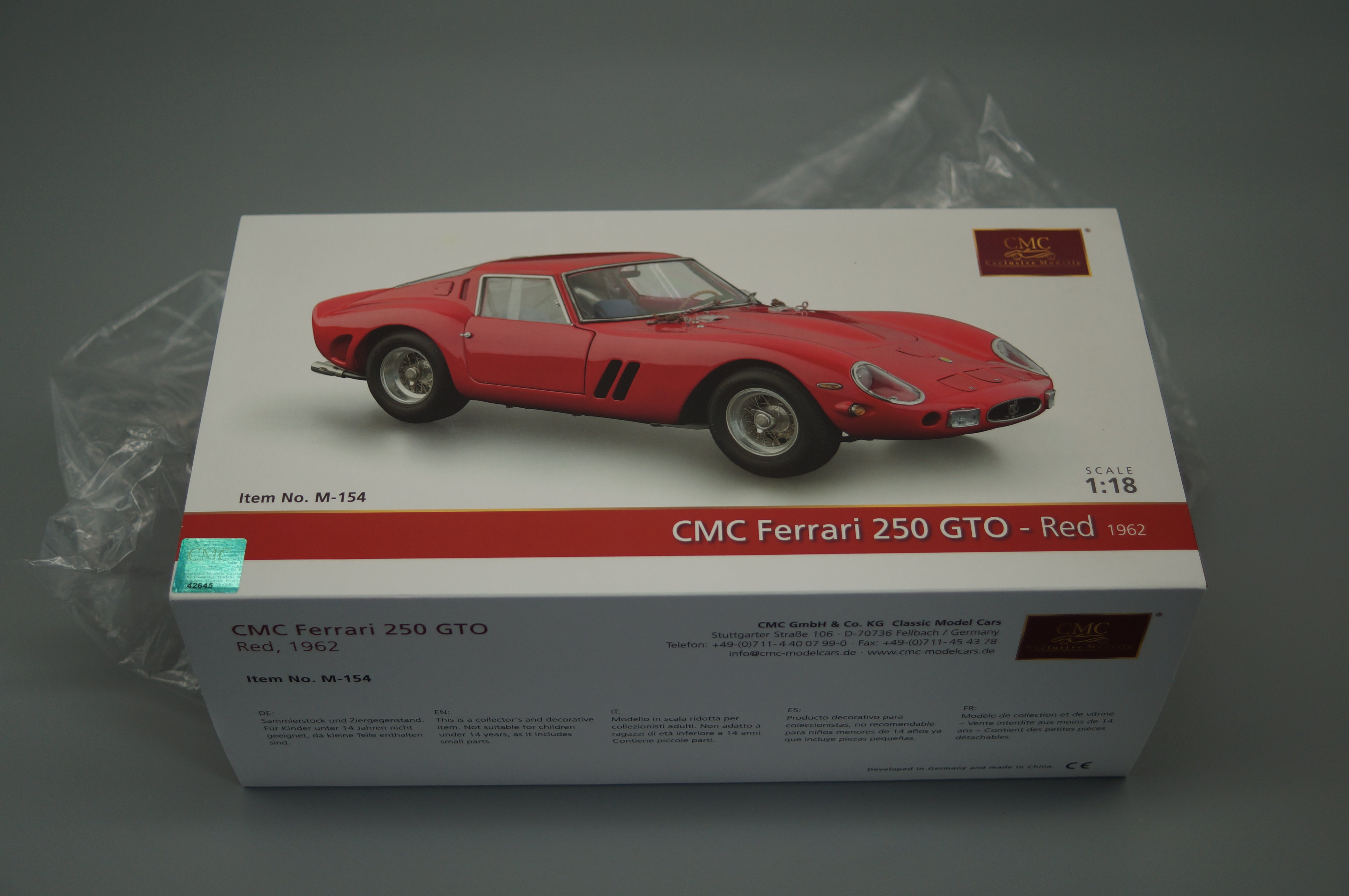
1/18 CMC Ferrari 250 GTO 1962 RED LHD #4301 CMC M-154 -PRE OWNED
Der Verkauf unterliegt der Differenzbesteuerung gem. § 25a UStG (Gebrauchtgegenstände/Sonderregelung). Ein gesonderter Ausweis der Umsatzsteuer für gebrauchte oder wiederaufbereitete Gegenstände ist nicht zulässig.


Description
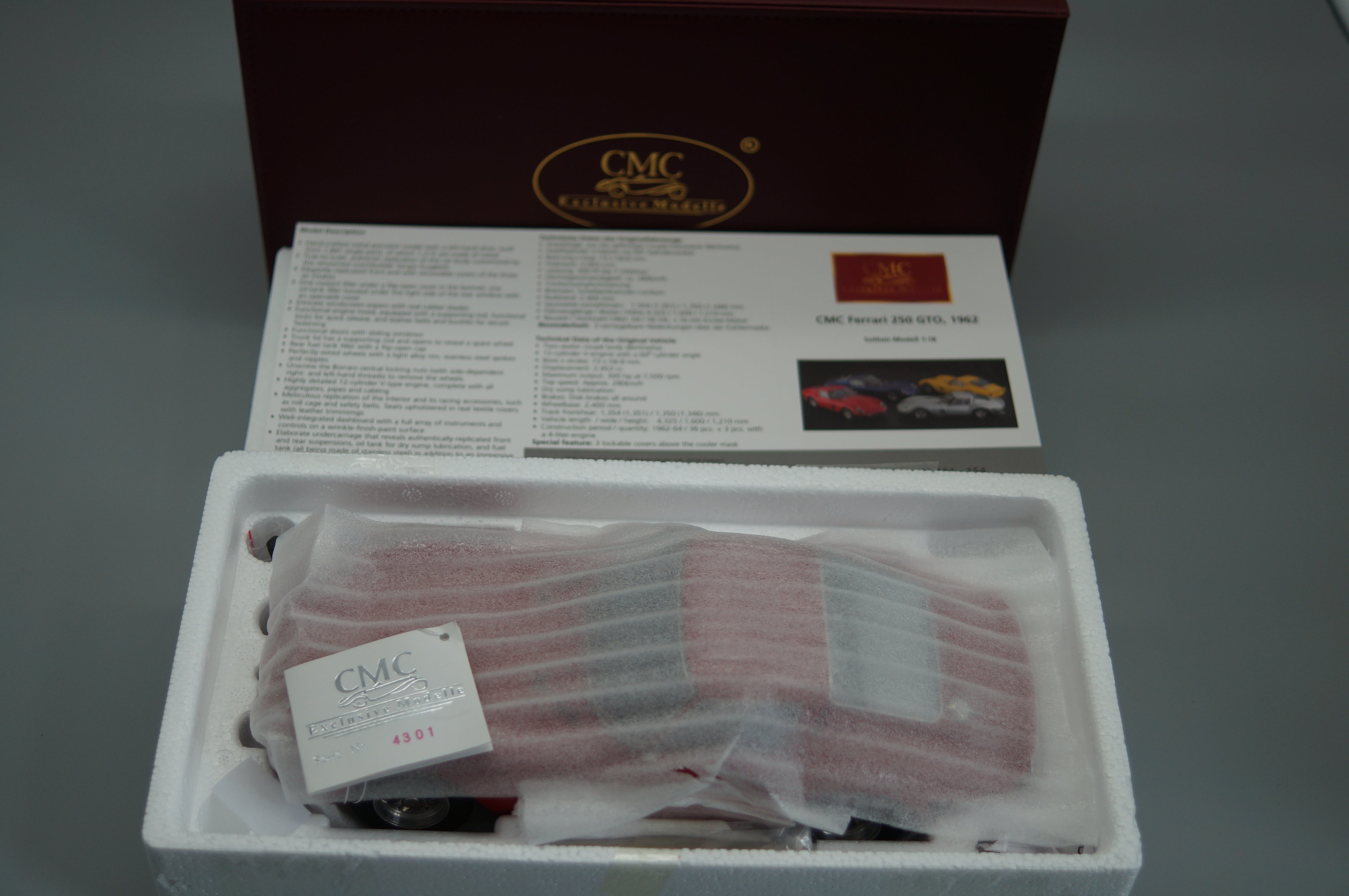
Today I am offering the collection of a former CMC dealer and long-time collector of these beautiful models. Almost all of them are in new condition in their original packaging with all accessories as shown in my photos. If the model has leather straps for closing the hoods, these have never been opened. In many cases, the security stickers are still present. Everything should be clearly visible in the photos. One or the other original packaging may show signs of storage.
You will receive an invoice according to §25a UstG without showing the statutory value-added tax for used goods.
Not suitable for children under 14 years. May contain small and sharp parts
Model History:
In March 1961, Ferrari became nervous. The reason for this was the newly introduced Jaguar E-Type at the Geneva Motor Show. It was seen as a serious competitor and there was fear of losing its supremacy in racing.
Enzo Ferrari acted immediately and commissioned Giotto Bizzarrini as project manager to develop a new GT vehicle. The well-proven 250 GT/SWB served as an experimental vehicle for Bizzarrini. It was clear that the chassis should be adopted as unchanged as possible with the same wheelbase of 2,400mm. The rear axle, body aerodynamics, and the vehicle's center of gravity were particularly in focus and were gradually improved.
The homologation was meanwhile finalized with the new type designation 250 GTO, with the "O" standing for the Italian word "Omologate". Due to the famous "Palace Revolution" against Enzo Ferrari, some responsible GTO developers, including Bizzarrini, had to leave the factory.
His successor was Mauro Foghieri, who, together with body designer Sergio Scaglietti, completed the development of the vehicle. The new GTO was presented to the world press in Maranello in February 1962 with a phenomenally beautiful body.
Its first race appearance was in 1962 at the 12 Hours of Sebring/USA, where the driver duo Phil Hill and Olivier Gendebien immediately achieved a victory in the GT class and finished second overall in the entire field. From then on, it only went uphill; in 1962, 1963, and 1964, Ferrari secured the Brand World Championship with the GTO.
A total of 39 GTO vehicles were built, 3 of which had a four-liter engine.
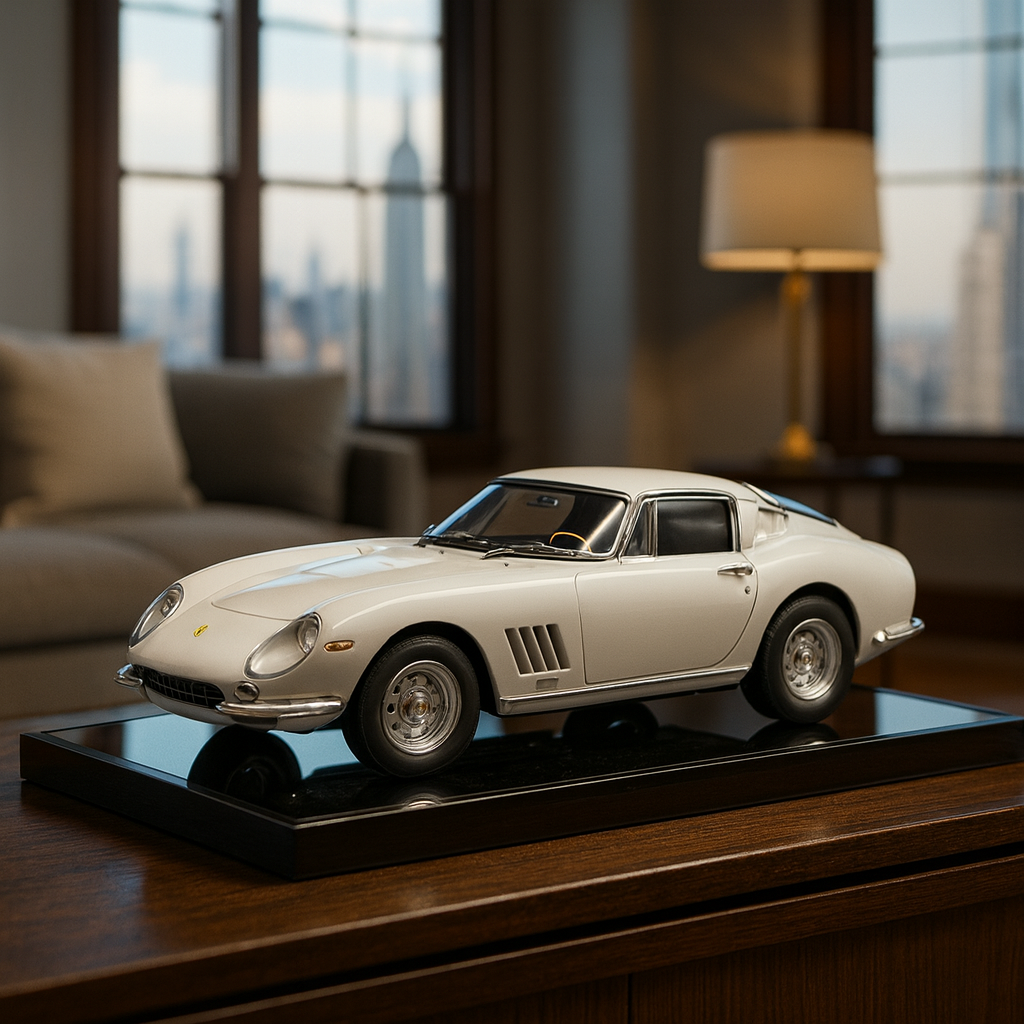
Look forward to CMC models of the absolute superlative. You have the choice between the exterior paint finishes silver, yellow, blue, and red to select a miniature according to your personal taste.
CMC Legal Disclaimer
The use of racing team and/or driver names, symbols, starting numbers, and/or descriptions is solely for reference purposes. Unless otherwise stated, it does not imply that the CMC scale model is a product of any of these racing teams/drivers or endorsed by any of them.
Model Description
- Hand-assembled metal precision model as a left-hand drive version, consisting of 1,841 parts, 1,215 of which are made of metal
- Authentic reproduction of the distinctive body design by the renowned body designer Sergio Scaglietti
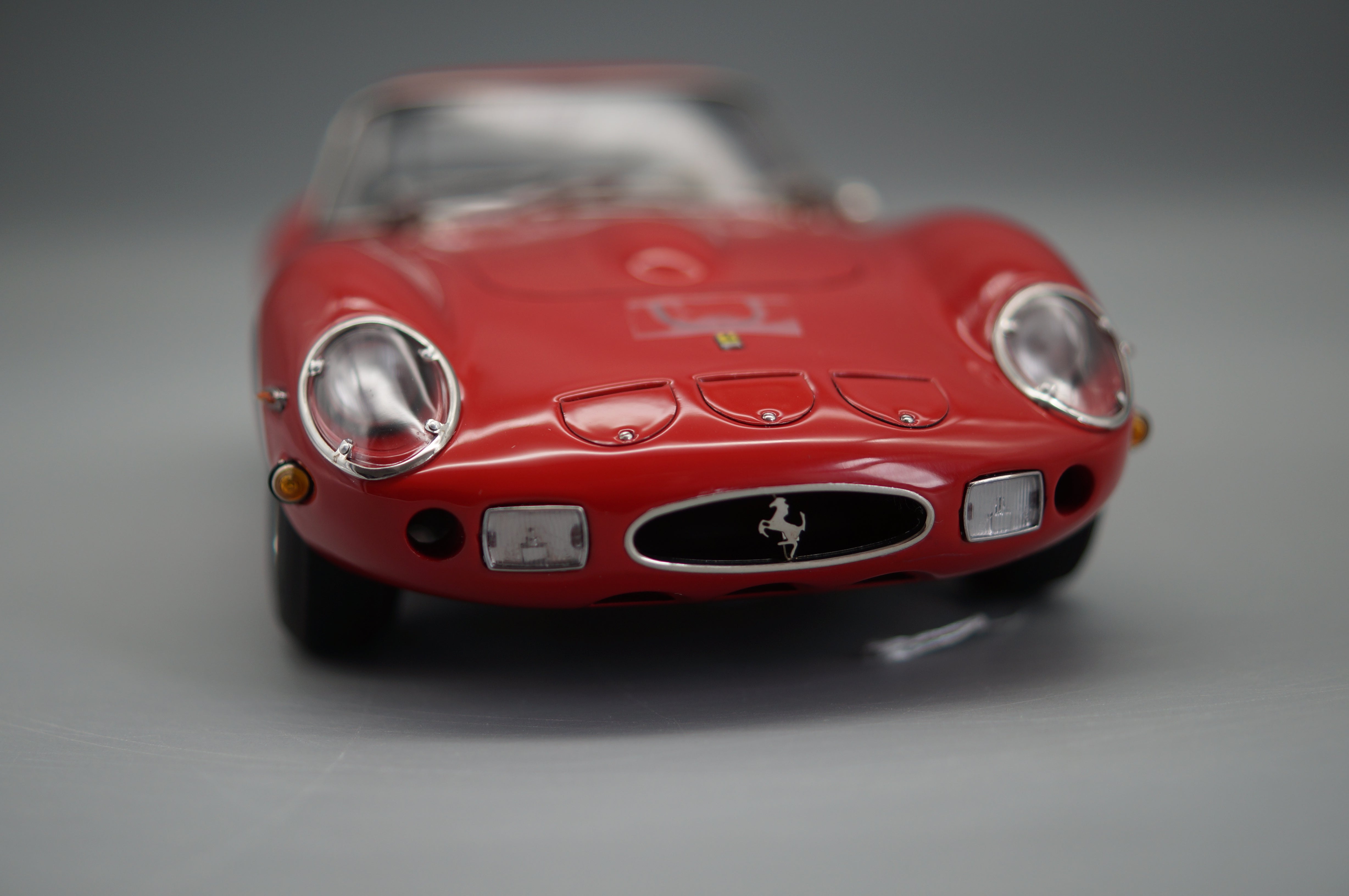
- Very attractively designed front end with removable covers for the three air intakes
- Movable flaps for coolant filler neck on the hood and oil filler neck on the right side of the vehicle at the height of the rear window
- Delicately designed windshield wipers with real rubber wiper blades
- Hinged engine hood with support rod for keeping it open, with functional quick-release fasteners and additional leather strap securing
- Functional doors with movable sliding windows
- Openable trunk lid with support rod and internal spare wheel
- Rear fuel filler neck with openable cap
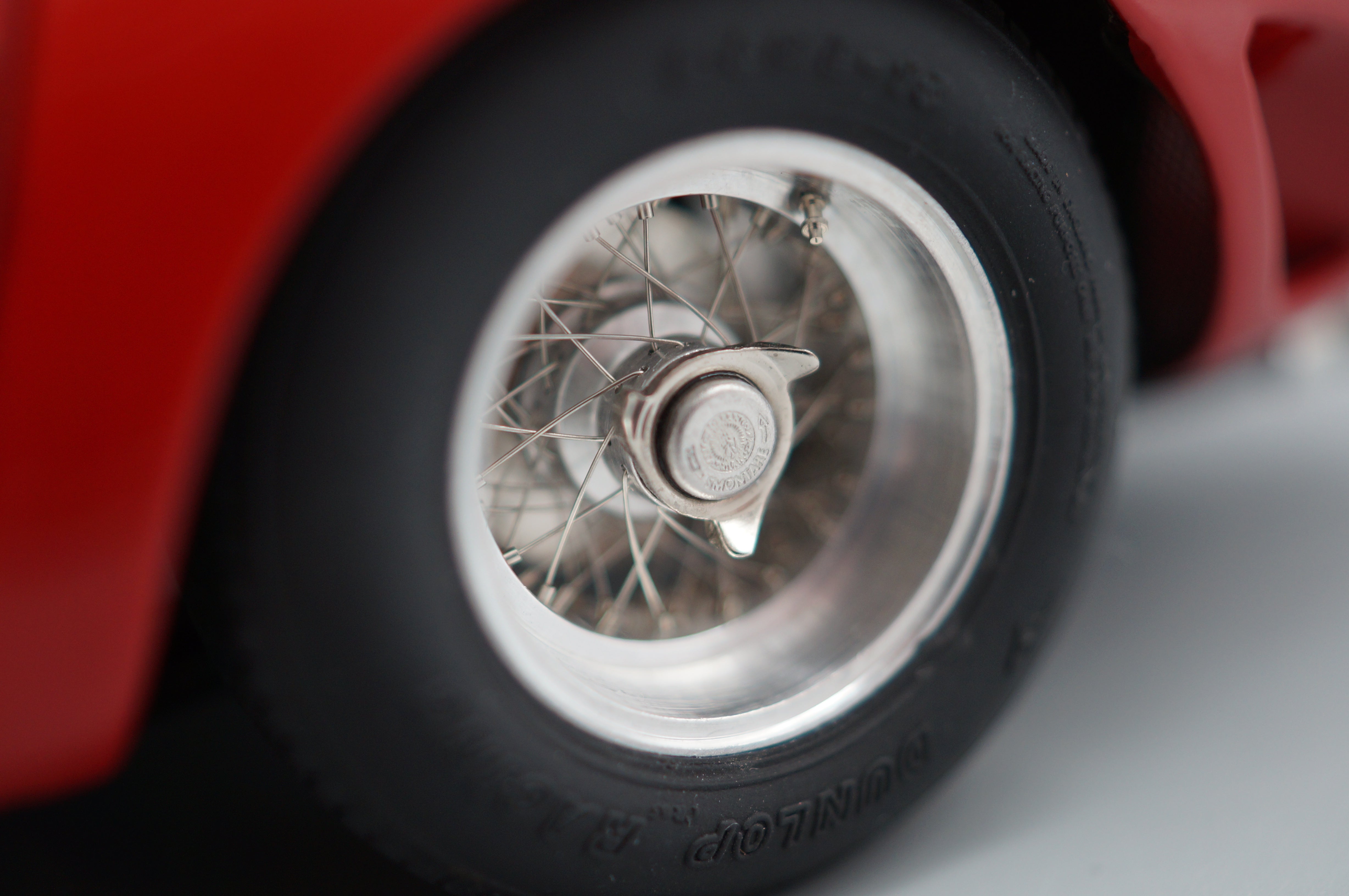
- Perfectly designed spoked wheels with hand-laced and nippled stainless steel wire spokes. Screwable Borrani central locks with right/left-hand thread
- Piping / wiring
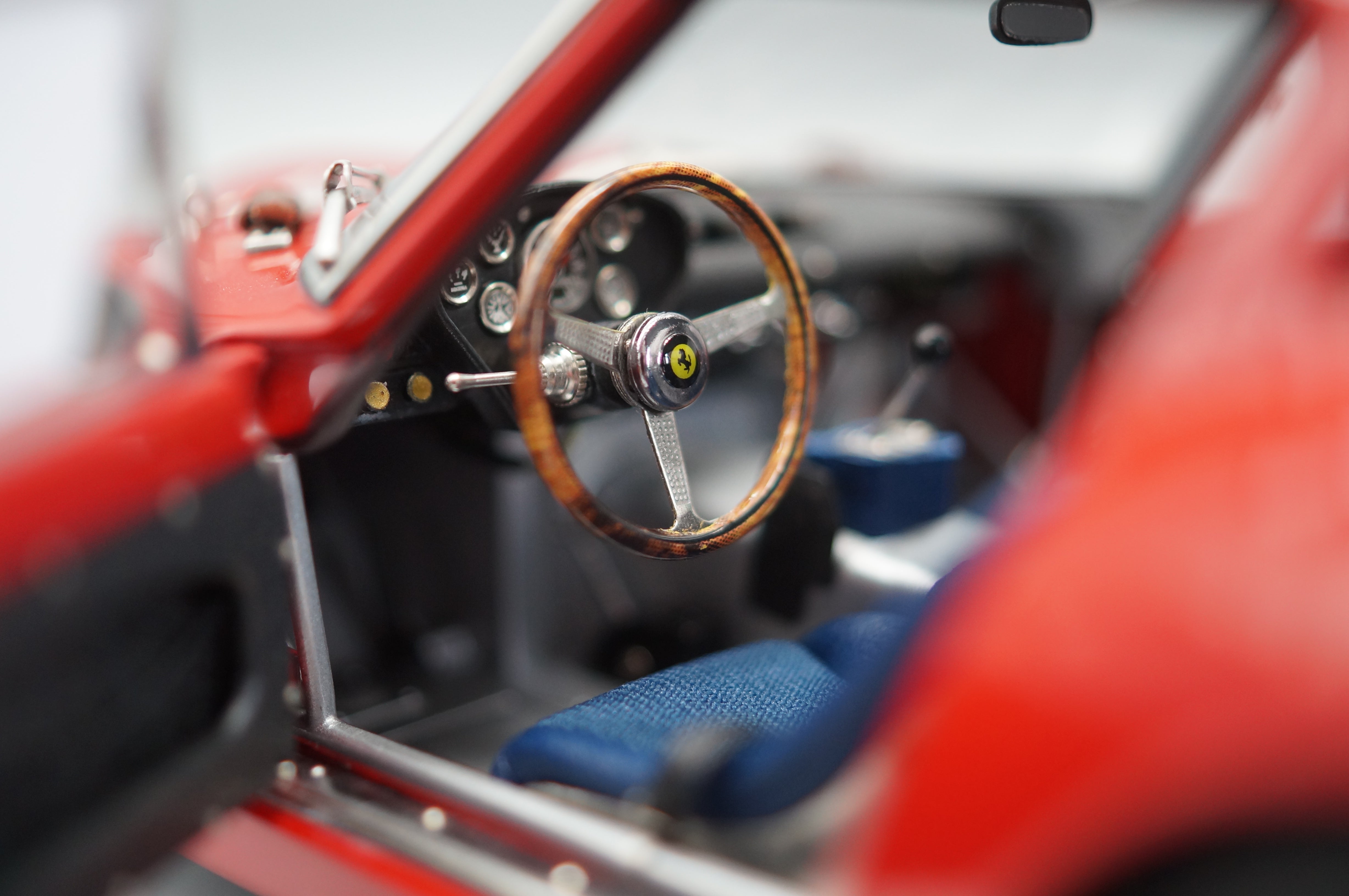
- Faithful reproduction of the vehicle interior with racing equipment, such as roll cage and seat belts. Seats with leather trim and real textile cover
- Harmonious dashboard designed in a wrinkle-finish paint design with all display instruments and control switches
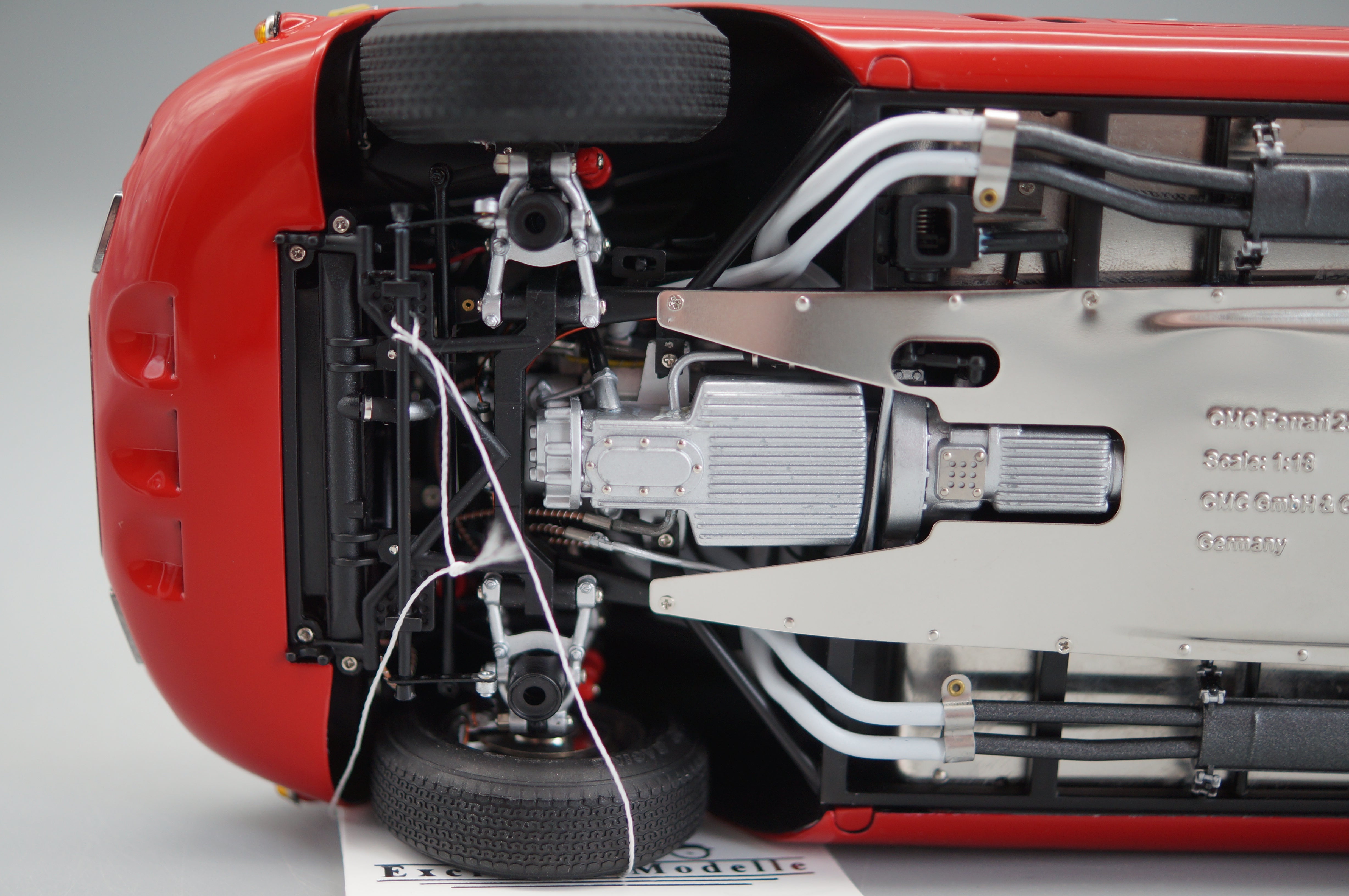
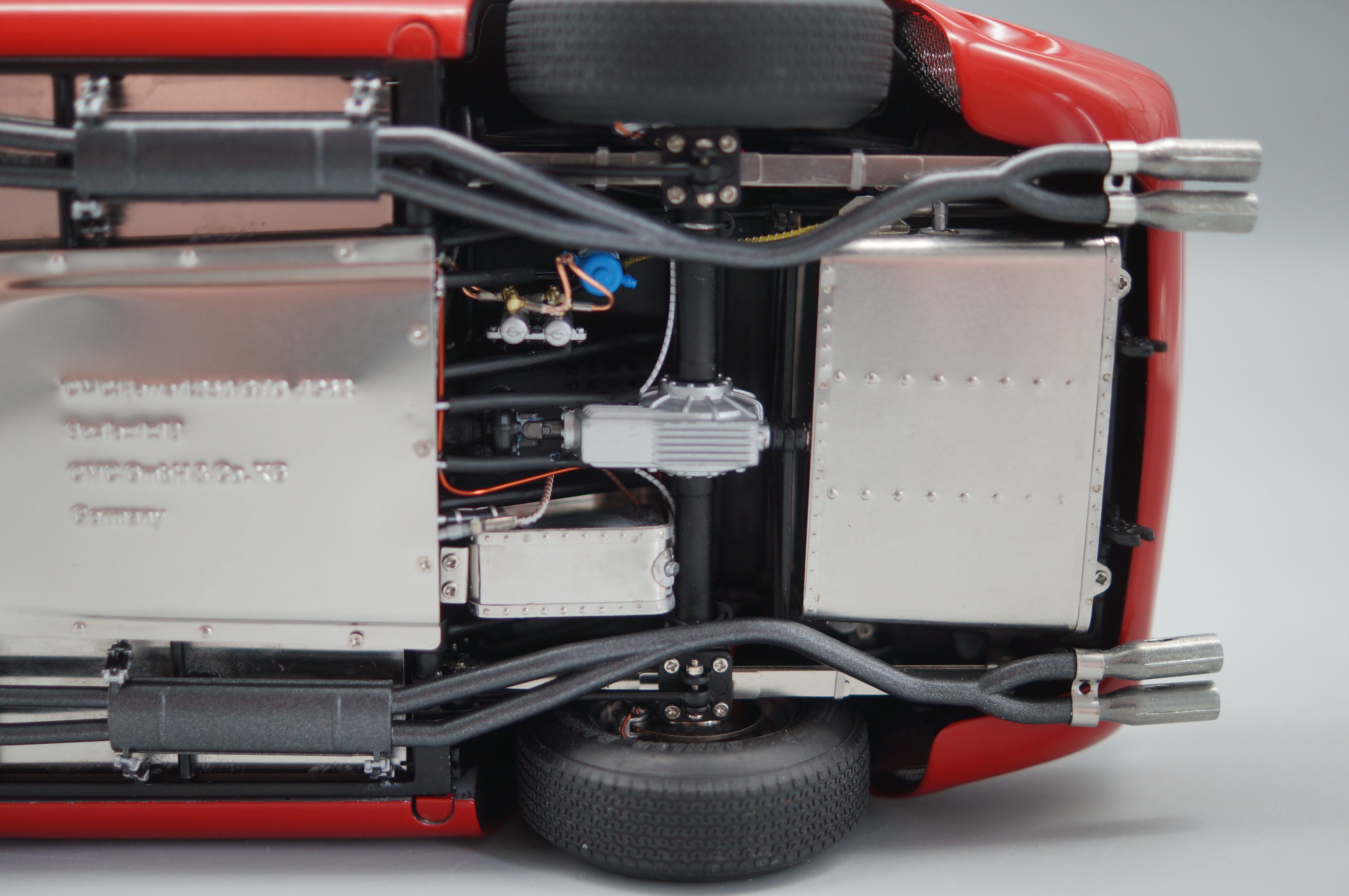
- Exact replica of the elaborate underbody with faithful reproduction of the front and rear suspension, the oil tank of the dry sump lubrication and the fuel tank, each made of stainless steel sheet, as well as an impressive tailpipe design of the racing exhaust system.
- Screw-off stainless steel underbody plate and brilliant high-gloss paint finish
Special feature: 3 lockable covers over the radiator grille close additional air intakes that can be removed if required.
Technical data of the original vehicle
Two-seater, aluminum coupe body (Berlinetta) on a tubular frame with lateral lattice tube frame reinforcement
Twelve-cylinder V-engine with a 60° cylinder angle and two overhead camshafts
Dry sump lubrication
| Bore x stroke: | 73 x 58.8 mm |
| Displacement: | 2,953 ccm |
| Compression ratio: | 9.8 : 1 |
| Power: | 300 hp at 7,500 rpm |
| Top speed: | approx. 280 km/h |
| Fuel system: | Six Weber 38 DCN dual carburetors |
| Power transmission: | Synchronized five-speed manual transmission with rear-wheel drive |
| Chassis: | Front independent suspension with trapezoidal wishbones and coil springs; rear rigid axle with longitudinal leaf springs and Koni shock absorbers, as well as Watt's linkage |
| Brakes: | Disc brakes all around |
| Wheelbase: | 2,400 mm |
| Track width front/rear: | 1,354 (1,351) / 1,350 (1,346) mm |
| Vehicle length / width / height: | 4,325 / 1,600 / 1,210 mm |
| Curb weight: | approx. 900 kg |
| Production period / quantity: | 1962-1964 / 36 units + 3 units with four-liter engine |
Not suitable for children under 14 years. May contain small and sharp parts.
Notice
Today I am offering the collection of a former CMC dealer and long-time collector of these beautiful models. Almost all of them are in new condition in their original packaging with all accessories as shown in my photos. If the model has leather straps for closing the hoods, these have never been opened. In many cases, the security stickers are still present. Everything should be clearly visible in the photos. One or the other original packaging may show signs of storage.
You will receive an invoice according to §25a UstG without showing the statutory value-added tax for used goods.
Not suitable for children under 14 years. May contain small and sharp parts
Model History:
In March 1961, Ferrari became nervous. The reason for this was the newly introduced Jaguar E-Type at the Geneva Motor Show. It was seen as a serious competitor and there was fear of losing its supremacy in racing.
Enzo Ferrari acted immediately and commissioned Giotto Bizzarrini as project manager to develop a new GT vehicle. The well-proven 250 GT/SWB served as an experimental vehicle for Bizzarrini. It was clear that the chassis should be adopted as unchanged as possible with the same wheelbase of 2,400mm. The rear axle, body aerodynamics, and the vehicle's center of gravity were particularly in focus and were gradually improved.
The homologation was meanwhile finalized with the new type designation 250 GTO, with the "O" standing for the Italian word "Omologate". Due to the famous "Palace Revolution" against Enzo Ferrari, some responsible GTO developers, including Bizzarrini, had to leave the factory.
His successor was Mauro Foghieri, who, together with body designer Sergio Scaglietti, completed the development of the vehicle. The new GTO was presented to the world press in Maranello in February 1962 with a phenomenally beautiful body.
Its first race appearance was in 1962 at the 12 Hours of Sebring/USA, where the driver duo Phil Hill and Olivier Gendebien immediately achieved a victory in the GT class and finished second overall in the entire field. From then on, it only went uphill; in 1962, 1963, and 1964, Ferrari secured the Brand World Championship with the GTO.
A total of 39 GTO vehicles were built, 3 of which had a four-liter engine.
Look forward to CMC models of the absolute superlative. You have the choice between the exterior paint finishes silver, yellow, blue, and red to select a miniature according to your personal taste.
CMC Legal Disclaimer
The use of racing team and/or driver names, symbols, starting numbers, and/or descriptions is solely for reference purposes. Unless otherwise stated, it does not imply that the CMC scale model is a product of any of these racing teams/drivers or endorsed by any of them.
Model Description
- Hand-assembled metal precision model as a left-hand drive version, consisting of 1,841 parts, 1,215 of which are made of metal
- Authentic reproduction of the distinctive body design by the renowned body designer Sergio Scaglietti
- Very attractively designed front end with removable covers for the three air intakes
- Movable flaps for coolant filler neck on the hood and oil filler neck on the right side of the vehicle at the height of the rear window
- Delicately designed windshield wipers with real rubber wiper blades
- Hinged engine hood with support rod for keeping it open, with functional quick-release fasteners and additional leather strap securing
- Functional doors with movable sliding windows
- Openable trunk lid with support rod and internal spare wheel
- Rear fuel filler neck with openable cap
- Perfectly designed spoked wheels with hand-laced and nippled stainless steel wire spokes. Screwable Borrani central locks with right/left-hand thread
- Piping / wiring
- Faithful reproduction of the vehicle interior with racing equipment, such as roll cage and seat belts. Seats with leather trim and real textile cover
- Harmonious dashboard designed in a wrinkle-finish paint design with all display instruments and control switches
- Exact replica of the elaborate underbody with faithful reproduction of the front and rear suspension, the oil tank of the dry sump lubrication and the fuel tank, each made of stainless steel sheet, as well as an impressive tailpipe design of the racing exhaust system.
- Screw-off stainless steel underbody plate and brilliant high-gloss paint finish
Special feature: 3 lockable covers over the radiator grille close additional air intakes that can be removed if required.
Technical data of the original vehicle
Two-seater, aluminum coupe body (Berlinetta) on a tubular frame with lateral lattice tube frame reinforcement
Twelve-cylinder V-engine with a 60° cylinder angle and two overhead camshafts
Dry sump lubrication
| Bore x stroke: | 73 x 58.8 mm |
| Displacement: | 2,953 ccm |
| Compression ratio: | 9.8 : 1 |
| Power: | 300 hp at 7,500 rpm |
| Top speed: | approx. 280 km/h |
| Fuel system: | Six Weber 38 DCN dual carburetors |
| Power transmission: | Synchronized five-speed manual transmission with rear-wheel drive |
| Chassis: | Front independent suspension with trapezoidal wishbones and coil springs; rear rigid axle with longitudinal leaf springs and Koni shock absorbers, as well as Watt's linkage |
| Brakes: | Disc brakes all around |
| Wheelbase: | 2,400 mm |
| Track width front/rear: | 1,354 (1,351) / 1,350 (1,346) mm |
| Vehicle length / width / height: | 4,325 / 1,600 / 1,210 mm |
| Curb weight: | approx. 900 kg |
| Production period / quantity: | 1962-1964 / 36 units + 3 units with four-liter engine |
Not suitable for children under 14 years. May contain small and sharp parts.