




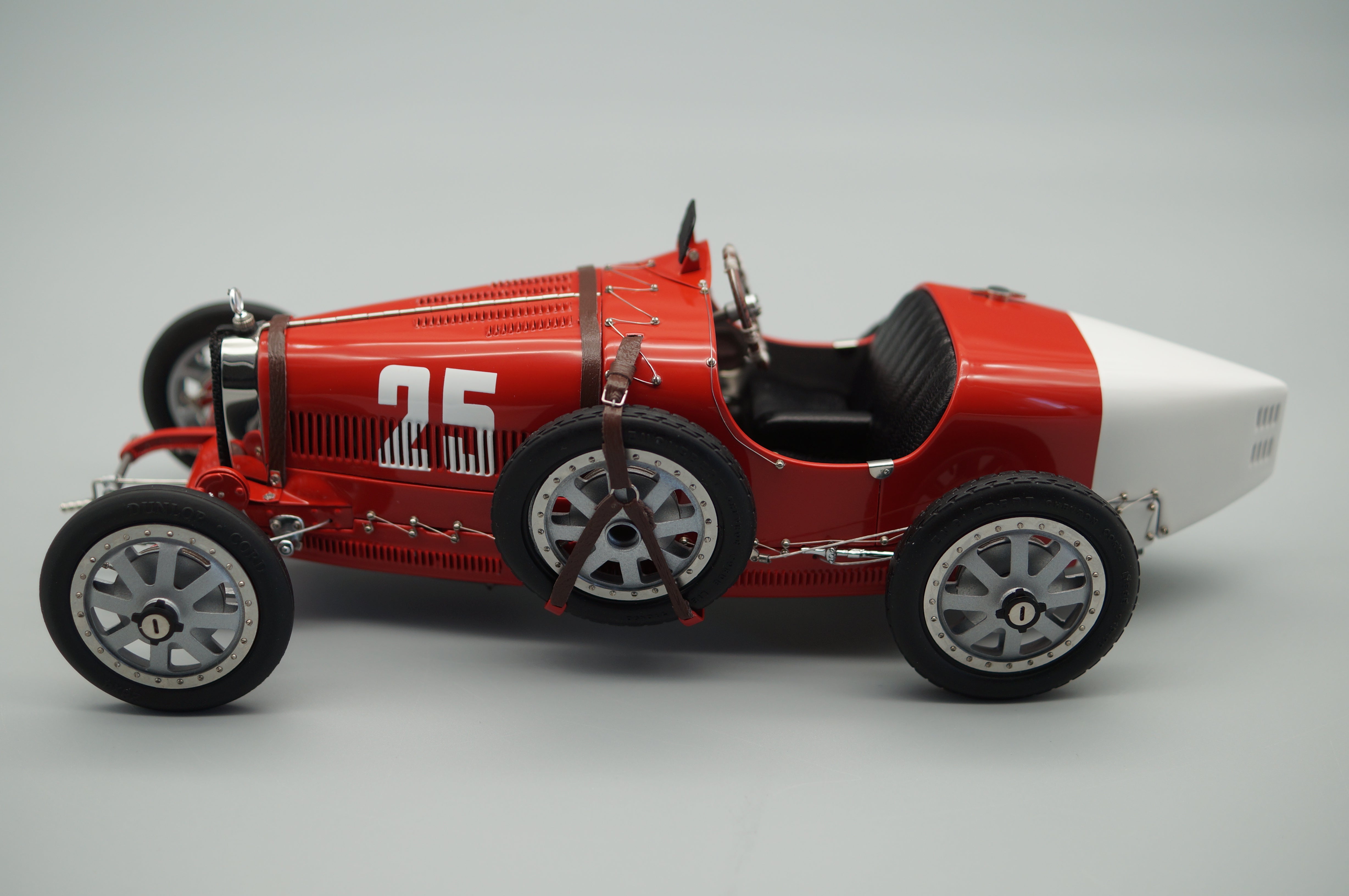
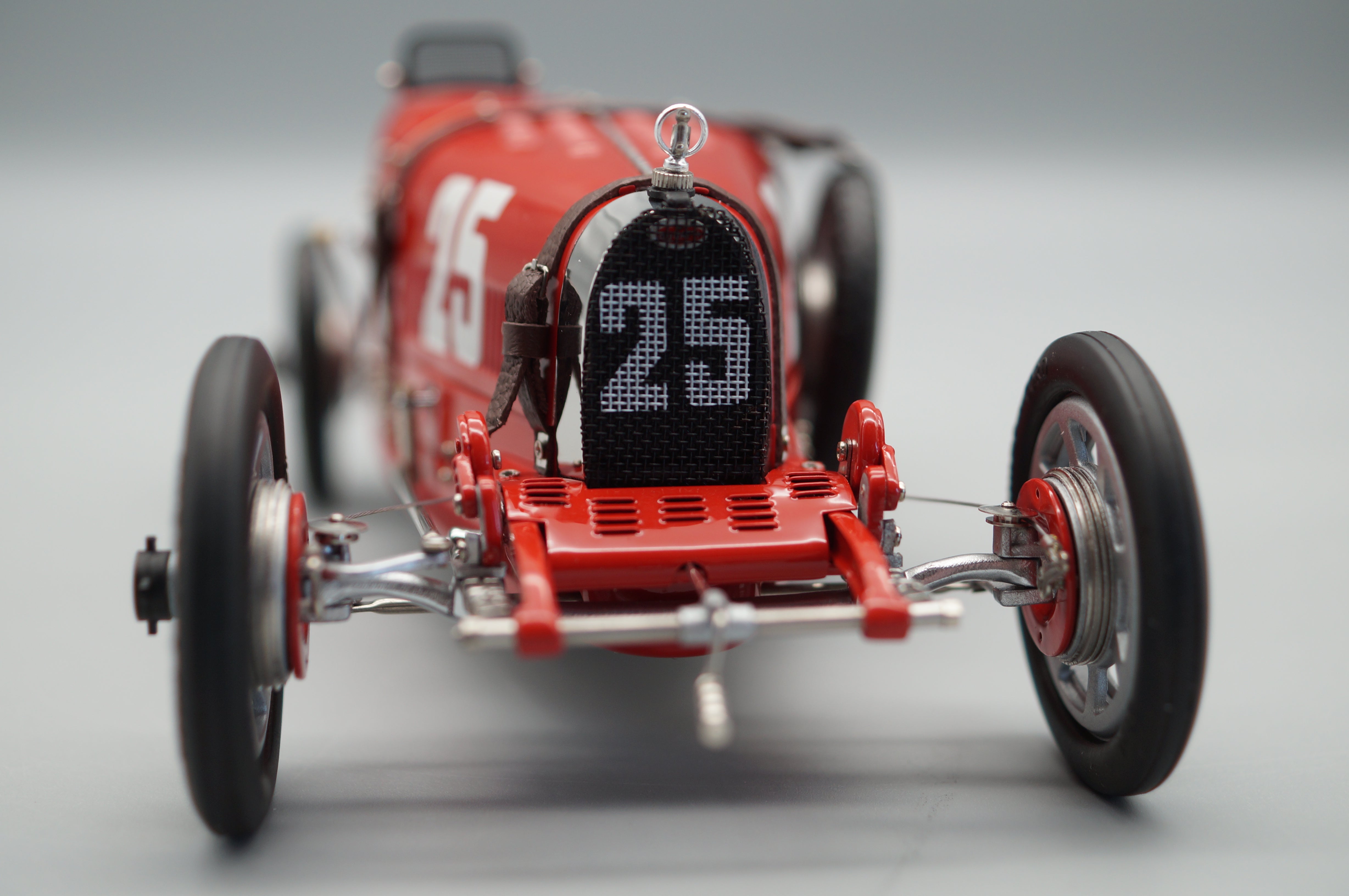
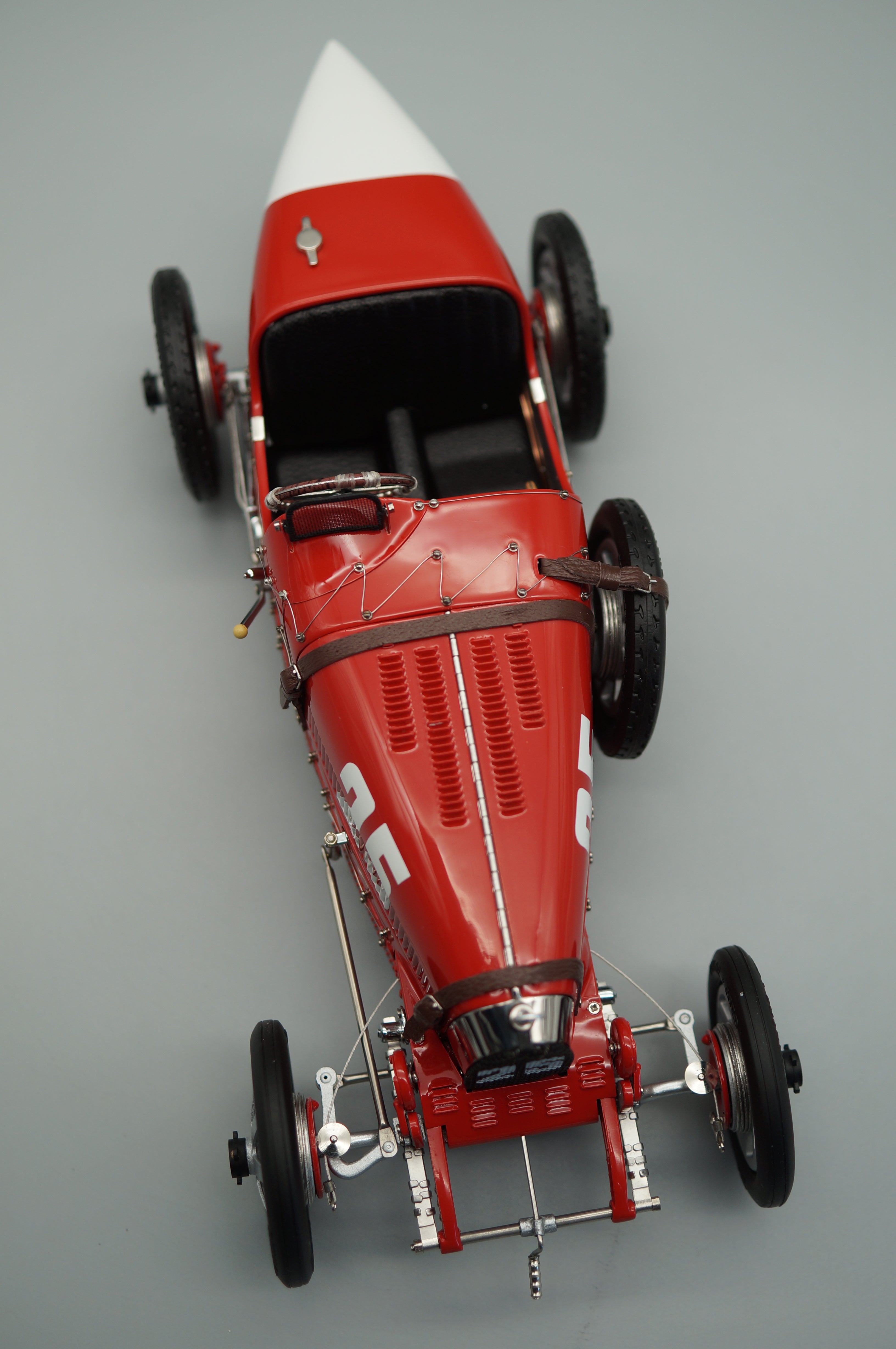
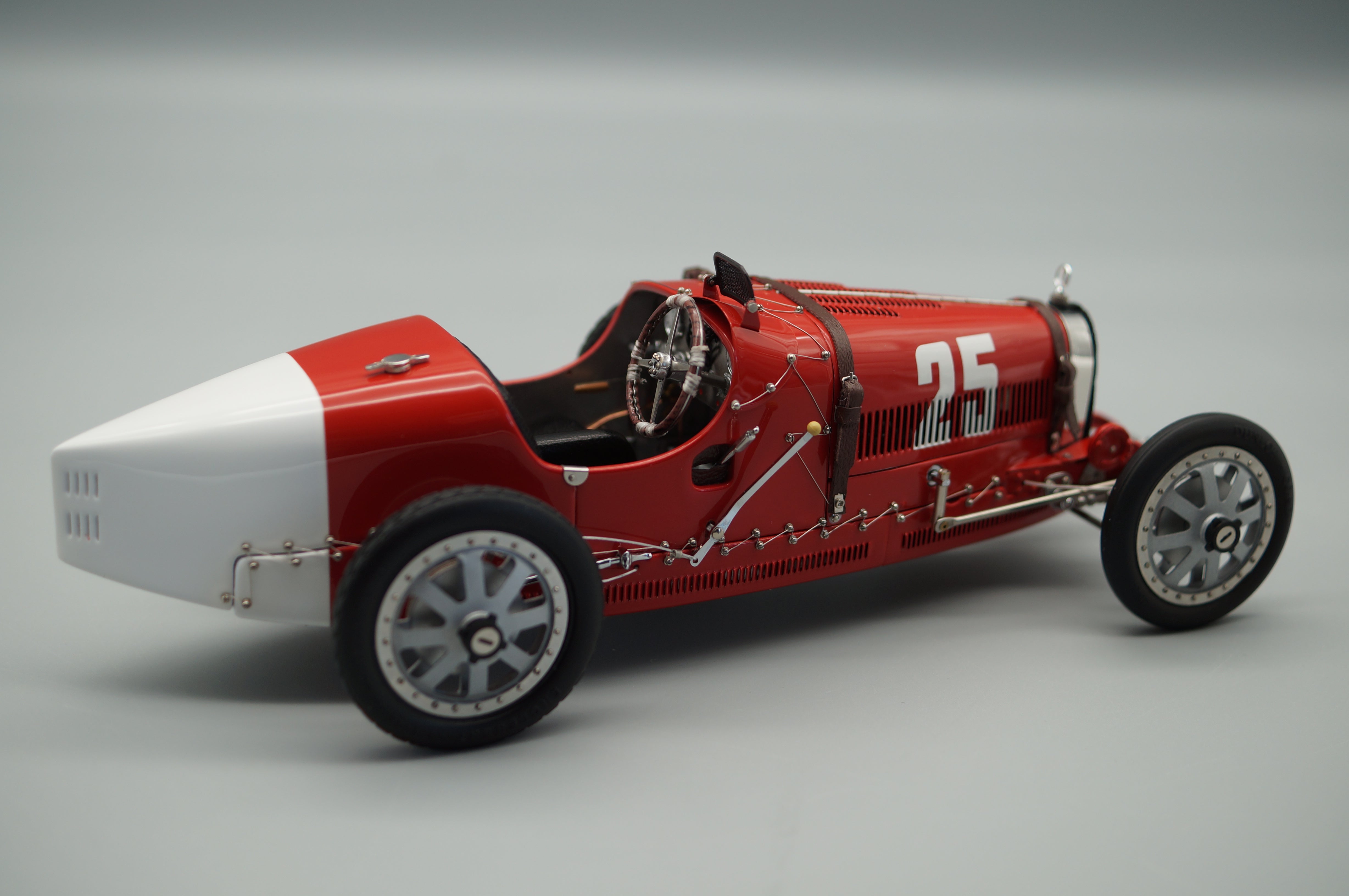
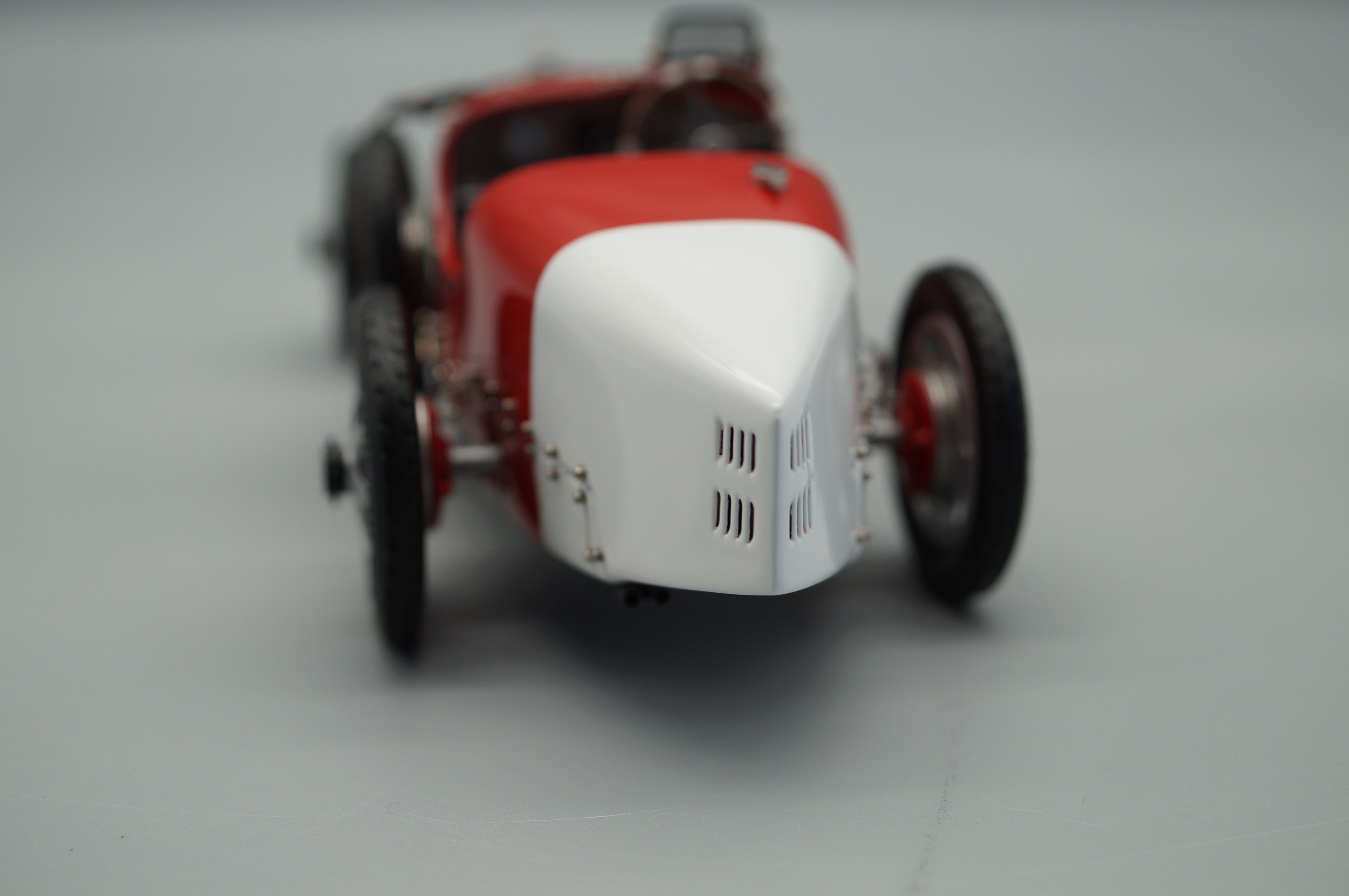
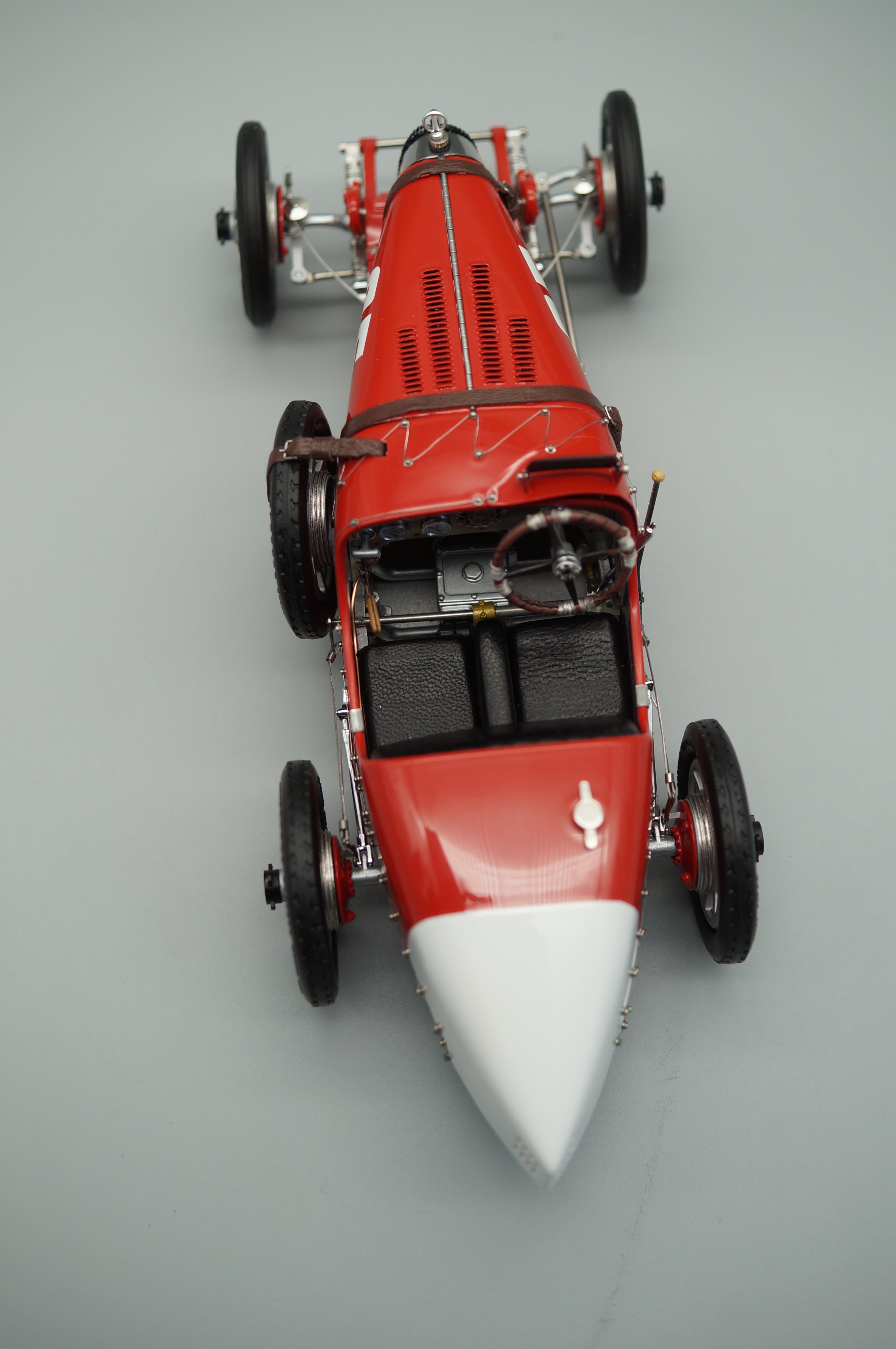
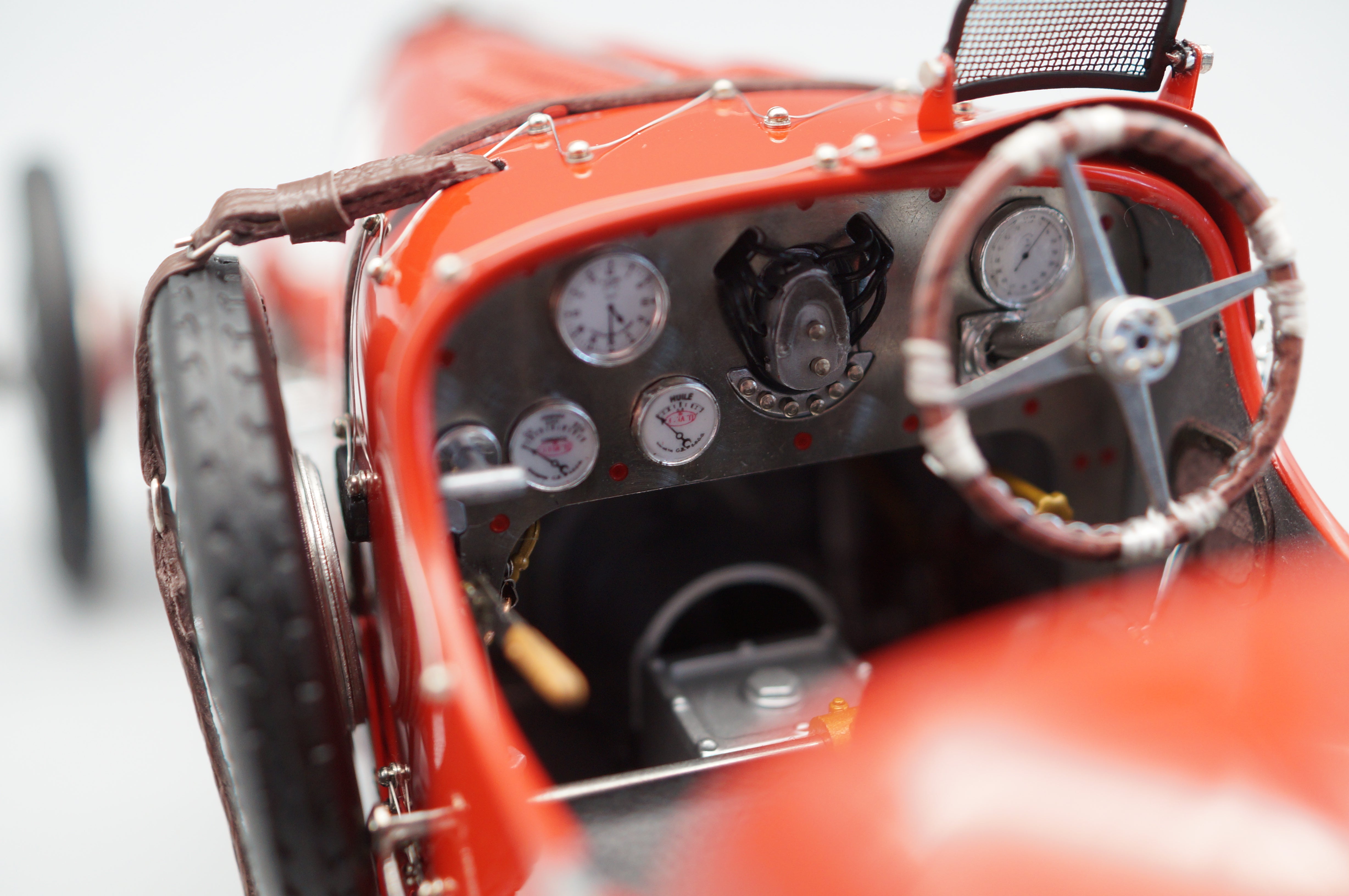
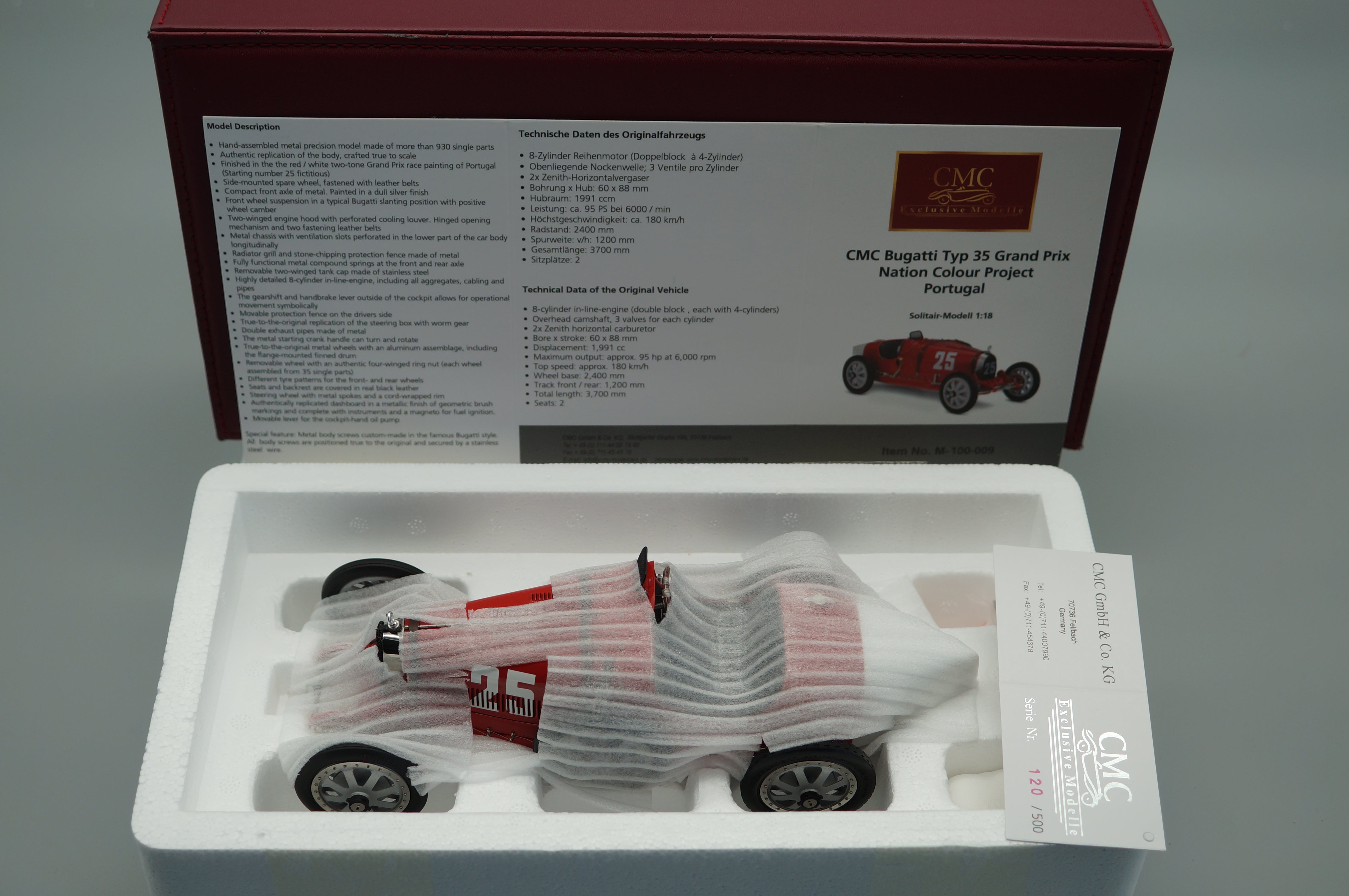
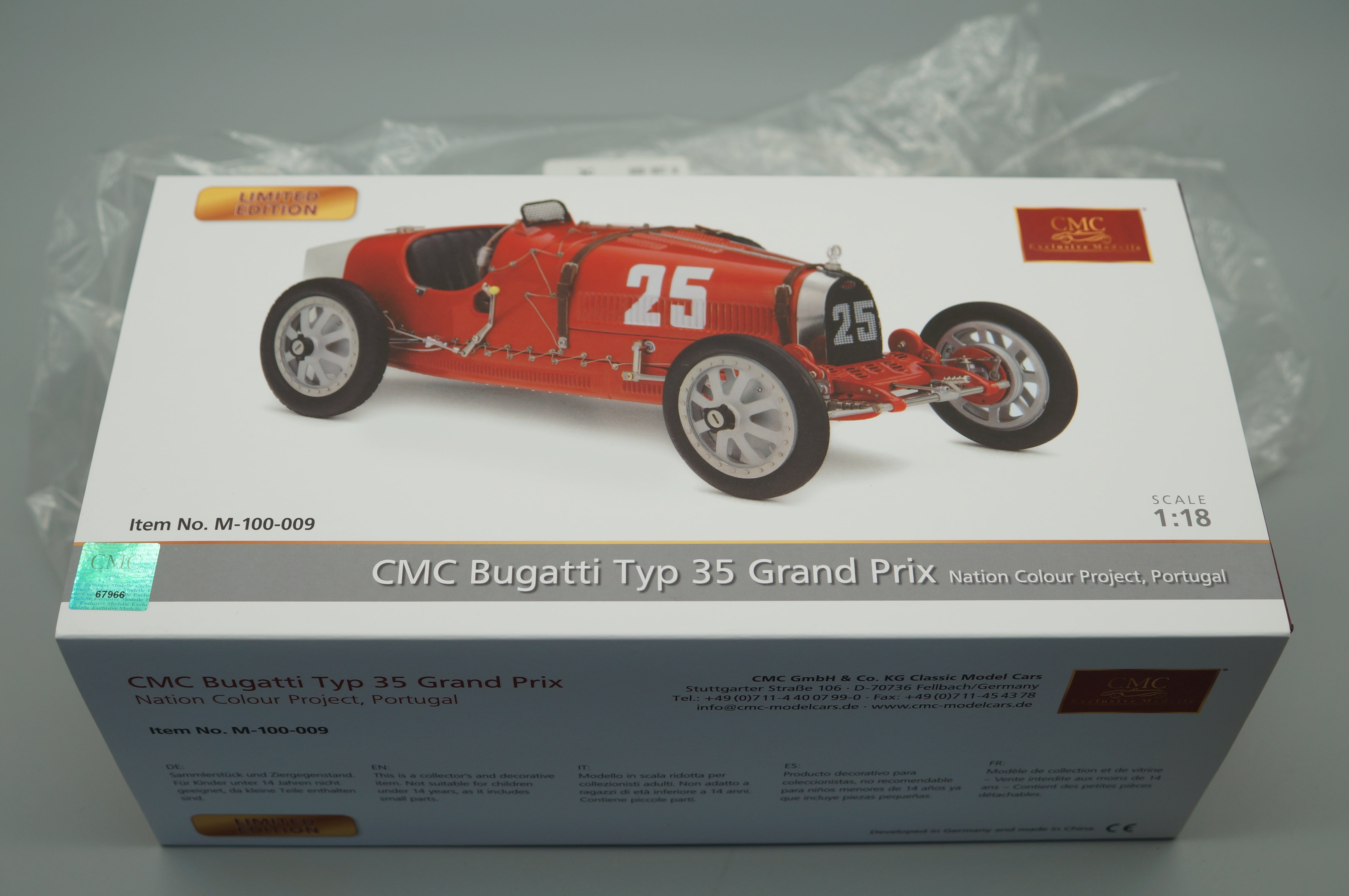
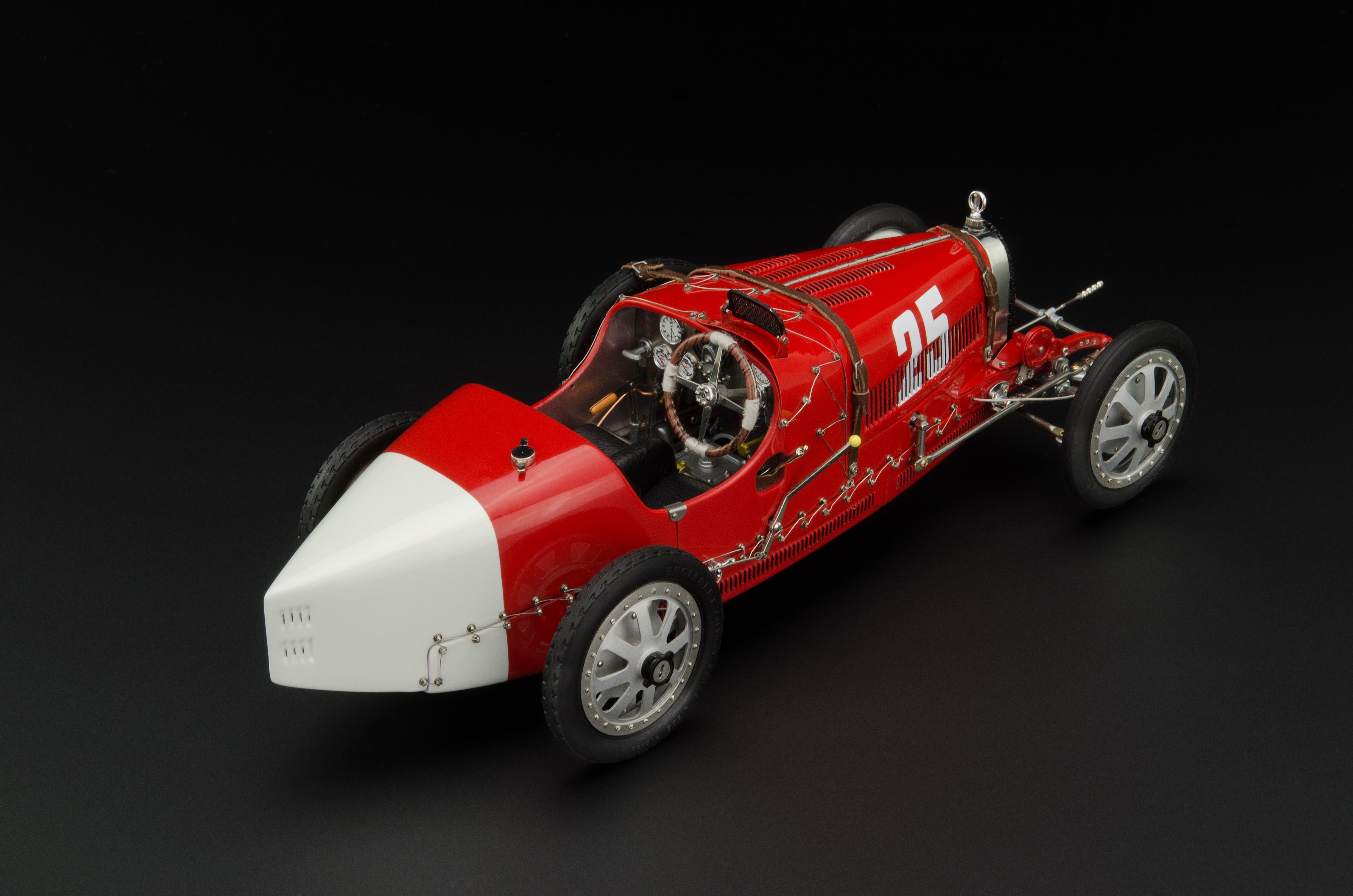
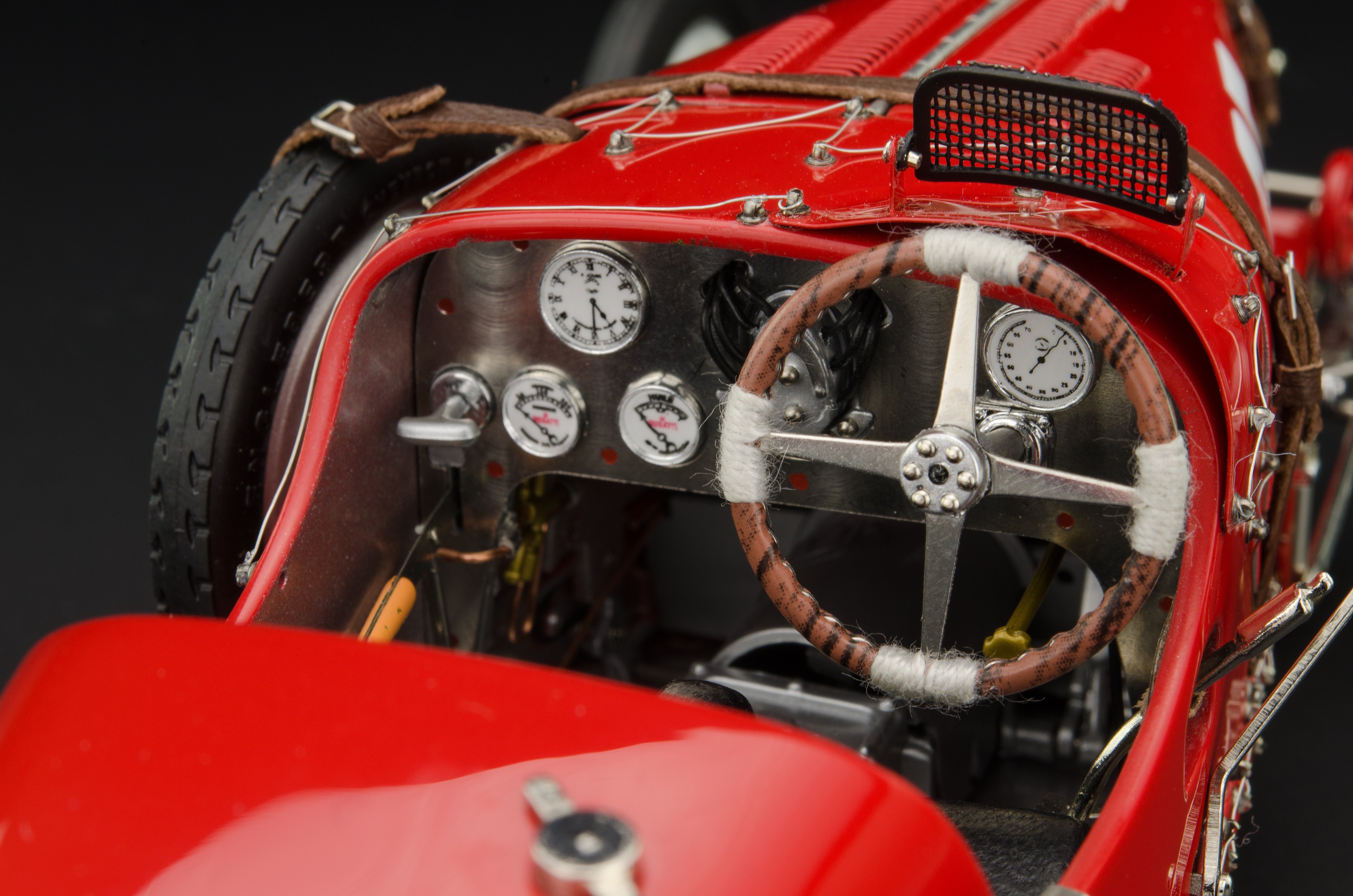
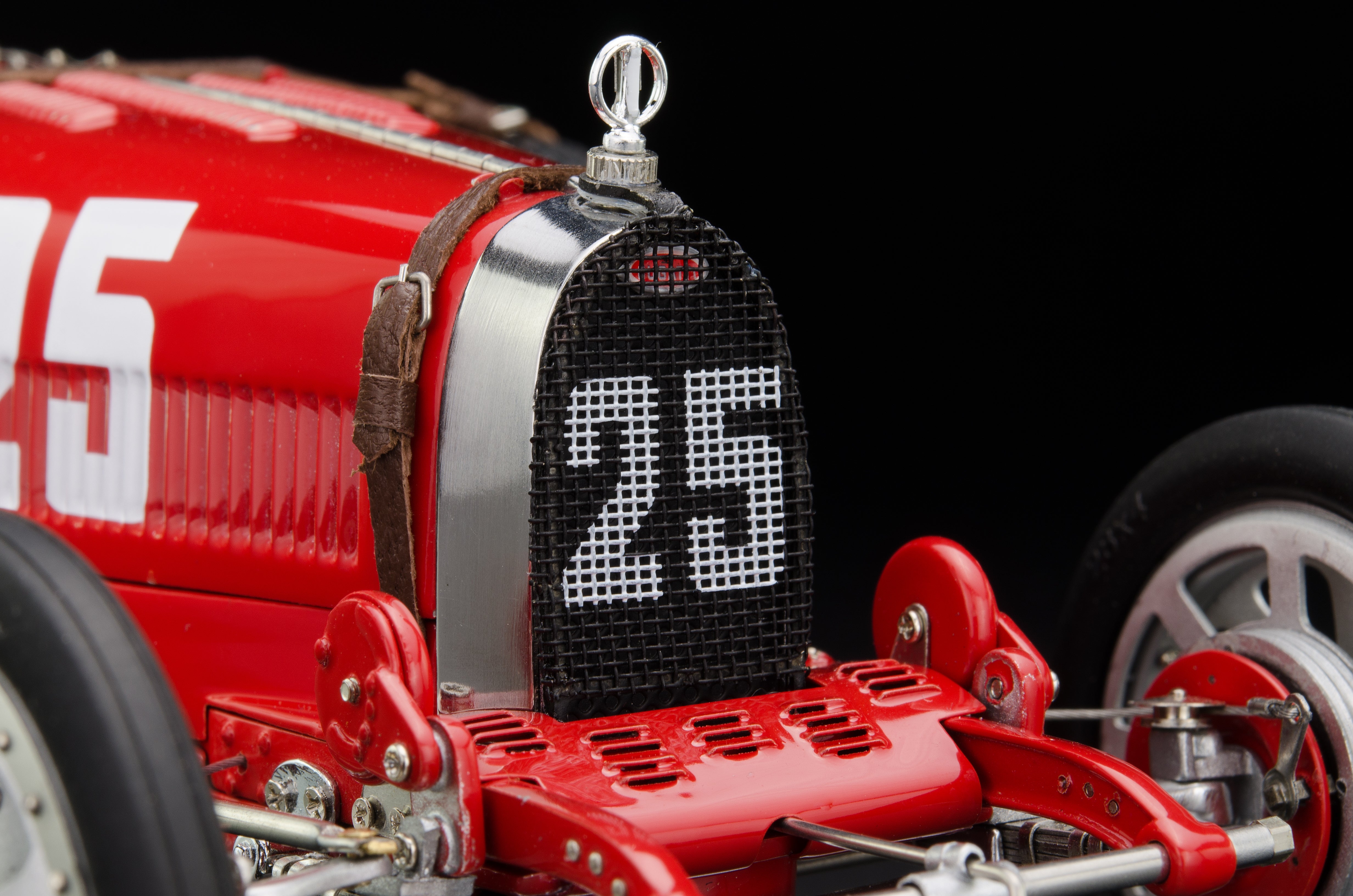
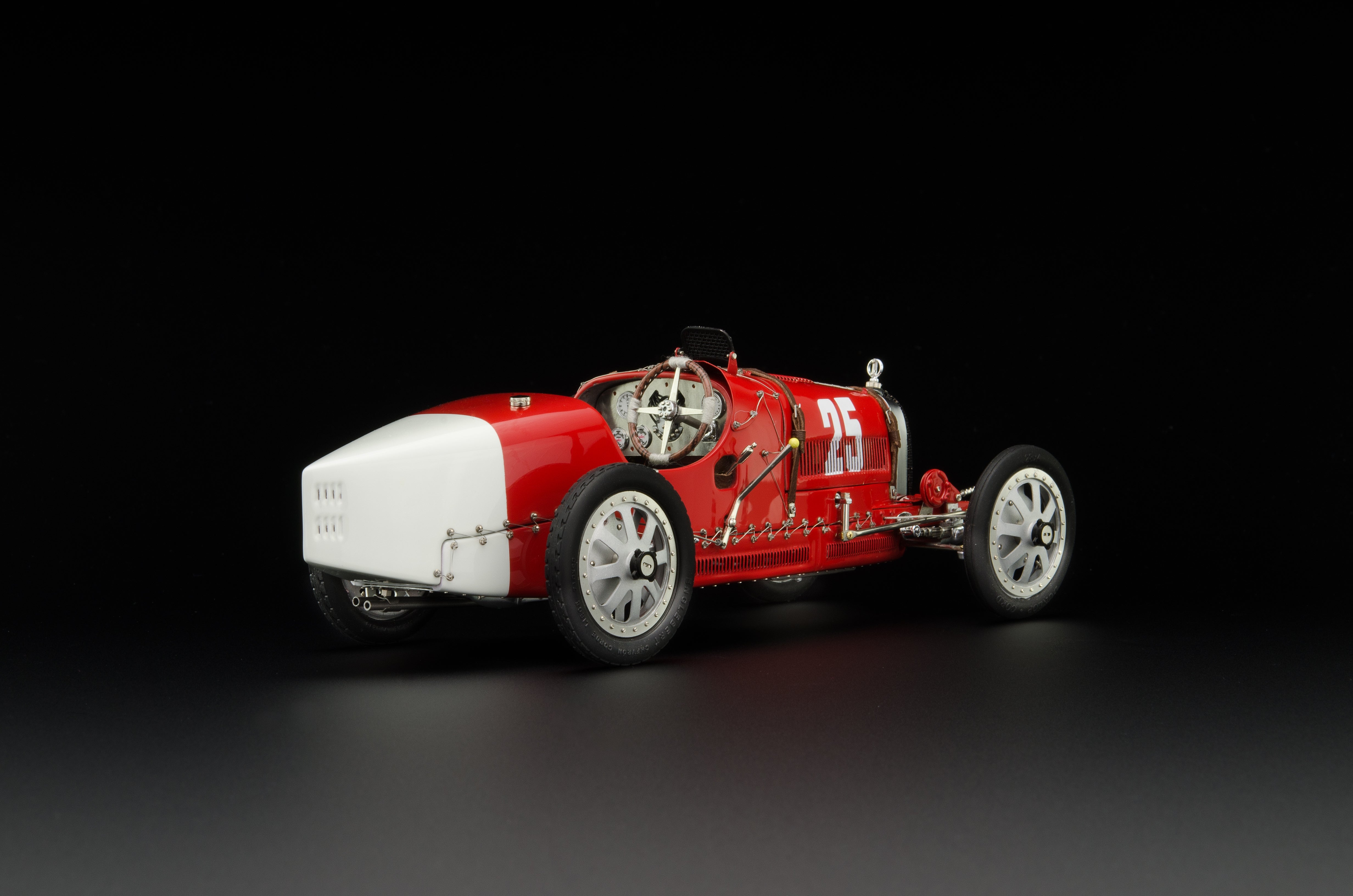
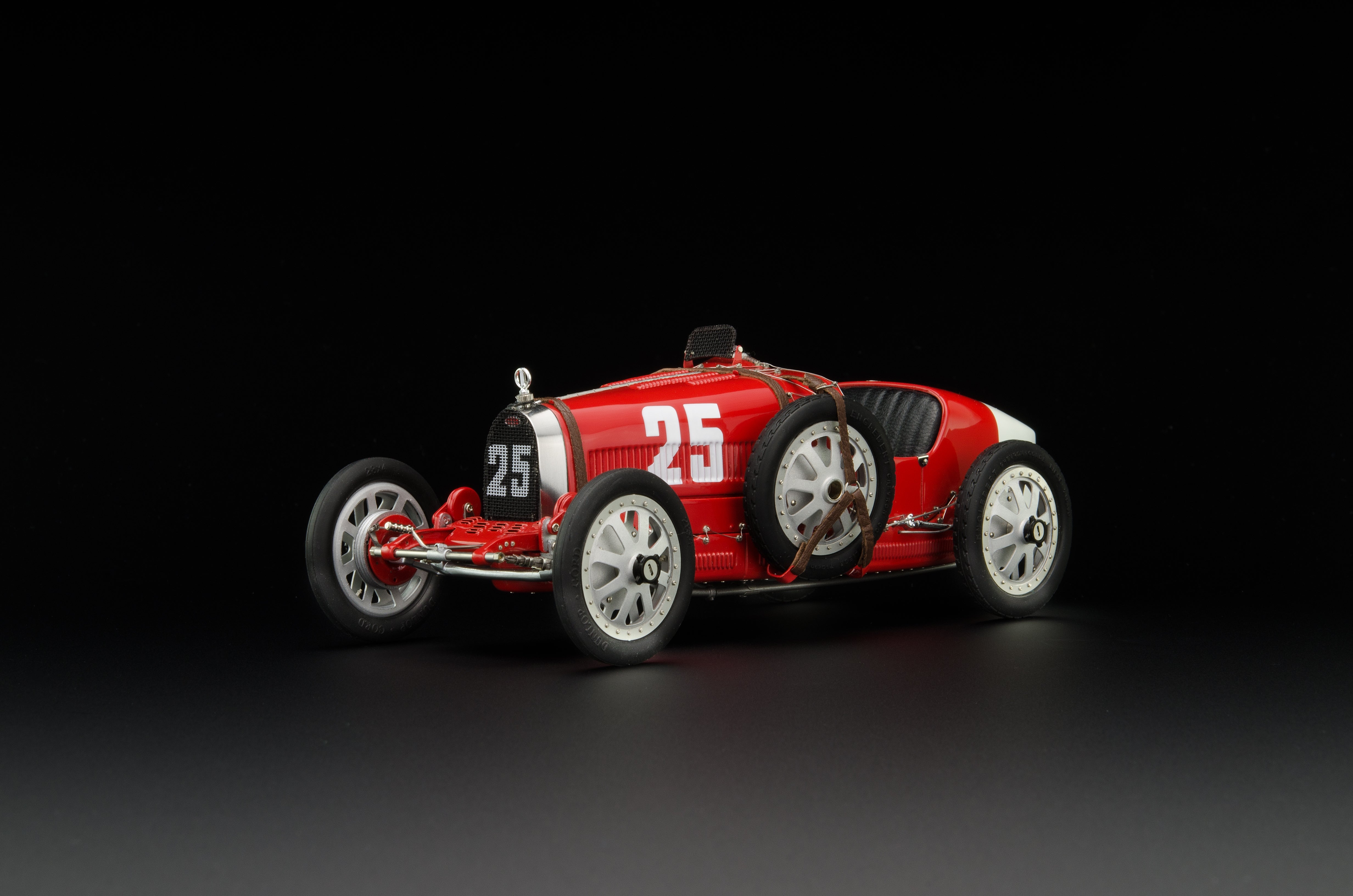
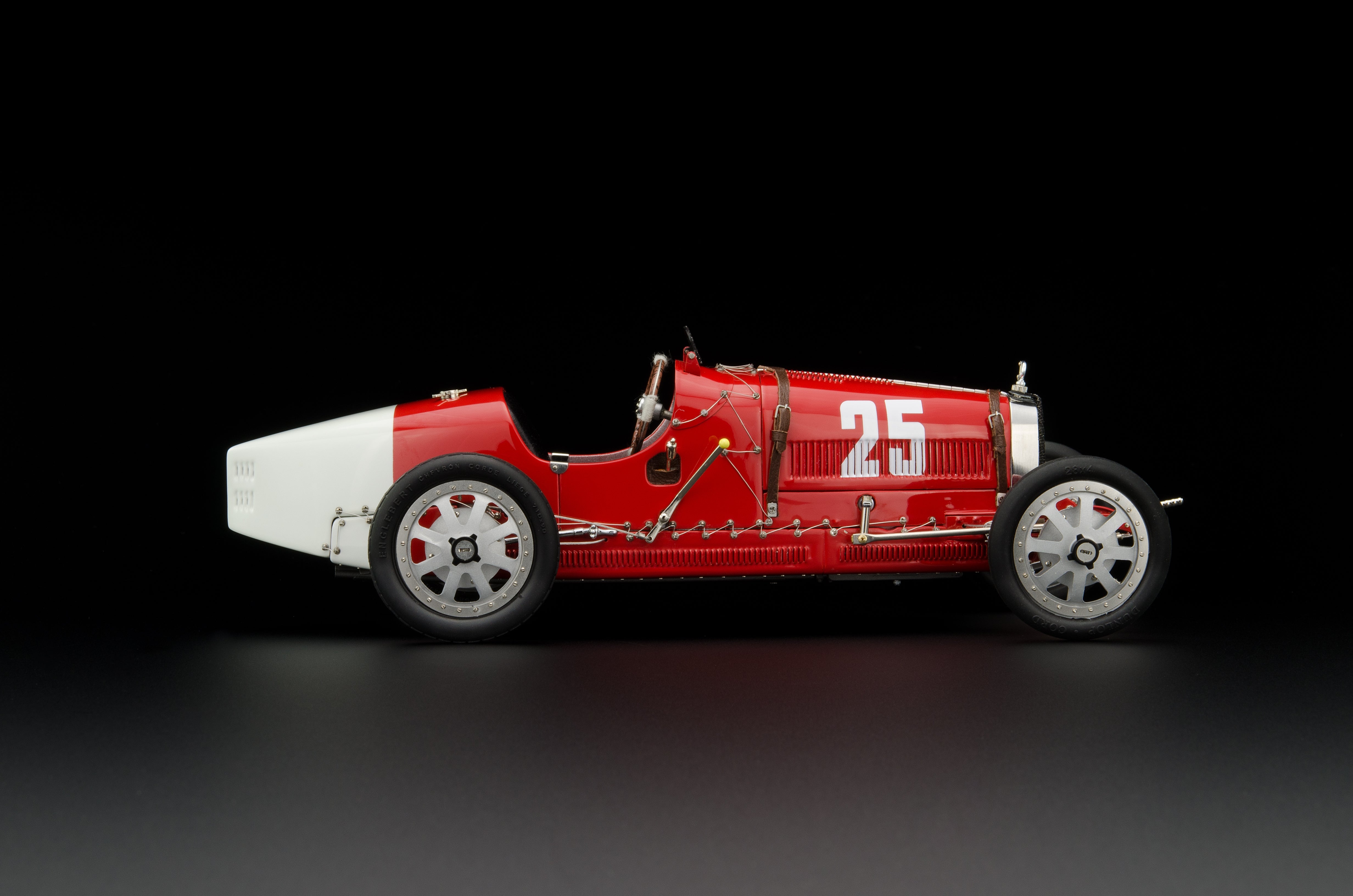
1:18 Bugatti T35 Nation Color Project - Portugal #25 LE 500 pcs. CMC M-100 009 -pre owned-
Der Verkauf unterliegt der Differenzbesteuerung gem. § 25a UStG (Gebrauchtgegenstände/Sonderregelung). Ein gesonderter Ausweis der Umsatzsteuer für gebrauchte oder wiederaufbereitete Gegenstände ist nicht zulässig.


Description
France is generally considered a kind of motherland of motorsport. As early as 1906, France hosted the first "Grand Prix" competition. This racing event ran annually until 1914 under the patronage of the Automobile Club de France (ACF).
After the end of the First World War, other countries also started to hold "Grands Prix", with the term "Grand Prix" coined by France becoming increasingly popular and very quickly accepted worldwide as a memorable synonym for the emerging international racing sport. After 1918, the Grand Prix of Italy (1921), Belgium (1925), Germany, and Great Britain (both 1926) followed for the first time.
These events soon attracted large audiences; the racing atmosphere was simply something new and special. And there was no shortage of thrills. Even back then, the motto was... "see and be seen". People dressed up when they went to the Grand Prix. The ladies in suits and hats, the gentlemen in fine suits with ties. The obligatory headwear, such as a hat or a sporty flat cap, was essential. Children were brought along in fashionable sailor suits of the time.
Unfortunately, the contemporary old black and white photos do not convey how colorful the racing cars of the 1920s and 1930s once looked. National colors were prescribed for each country. In this way, colorfully painted racing cars gathered at every Grand Prix.
We would therefore like to show you, using the example of a basic model of the Bugatti T 35 Grand Prix, which dominated the racing scene of that time, which country-specific racing colors could be found on the racetracks.
Note: The appearance of the model, as well as the lettering design (start numbers), do not claim historical authenticity and cannot be assigned to any specific race or driver personality.M-100-xxx CMC Bugatti Type 35 / Nations Project
Technical data of the original vehicle
Eight-cylinder inline engine (double block), overhead camshaft
with three valves per cylinder, two Zenith horizontal carburetors
| Power: | 95 hp at 6,000 rpm |
| Displacement: | 1,991 ccm |
| Top speed: | approx. 180 km/h |
| Wheelbase: | 2,400 mm |
| Overall length: | 3,700 mm |
Not suitable for children under 14 years. May contain small and sharp parts.
Notice
France is generally considered a kind of motherland of motorsport. As early as 1906, France hosted the first "Grand Prix" competition. This racing event ran annually until 1914 under the patronage of the Automobile Club de France (ACF).
After the end of the First World War, other countries also started to hold "Grands Prix", with the term "Grand Prix" coined by France becoming increasingly popular and very quickly accepted worldwide as a memorable synonym for the emerging international racing sport. After 1918, the Grand Prix of Italy (1921), Belgium (1925), Germany, and Great Britain (both 1926) followed for the first time.
These events soon attracted large audiences; the racing atmosphere was simply something new and special. And there was no shortage of thrills. Even back then, the motto was... "see and be seen". People dressed up when they went to the Grand Prix. The ladies in suits and hats, the gentlemen in fine suits with ties. The obligatory headwear, such as a hat or a sporty flat cap, was essential. Children were brought along in fashionable sailor suits of the time.
Unfortunately, the contemporary old black and white photos do not convey how colorful the racing cars of the 1920s and 1930s once looked. National colors were prescribed for each country. In this way, colorfully painted racing cars gathered at every Grand Prix.
We would therefore like to show you, using the example of a basic model of the Bugatti T 35 Grand Prix, which dominated the racing scene of that time, which country-specific racing colors could be found on the racetracks.
Note: The appearance of the model, as well as the lettering design (start numbers), do not claim historical authenticity and cannot be assigned to any specific race or driver personality.M-100-xxx CMC Bugatti Type 35 / Nations Project
Technical data of the original vehicle
Eight-cylinder inline engine (double block), overhead camshaft
with three valves per cylinder, two Zenith horizontal carburetors
| Power: | 95 hp at 6,000 rpm |
| Displacement: | 1,991 ccm |
| Top speed: | approx. 180 km/h |
| Wheelbase: | 2,400 mm |
| Overall length: | 3,700 mm |
Not suitable for children under 14 years. May contain small and sharp parts.